- Details
- Hits: 1016
Positioning and directing has always been the art. Human action evolves through choices, corrections, evaluations, all complex operations governed by propensities - knowledge - perceptions - tastes - relationships - environmental conditioning - occasional influences. The variables are many and all related to the here and now.In this perspective, the university orientation that has a temporary location linked to the transition from adolescence to adult life takes on a very particular and decisive value.
All universities work to assist and accompany this delicate and strategic phase not only for the individual student but also for the development of the country. On what to focus our attention beyond the swirling development, the ongoing transformations and the dazzle of the labor market? How to avoid disappointments, dispersions and the syndrome of having missed everything?
It seems to us indispensable to indicate that before the professional plan (to act) there is that of self-awareness (to be) which offers the self the opportunity to "see oneself" and therefore to project oneself into the profession glimpsed. It is a compass that we can call in many ways: passion motivation determination autonomy creativity ... listening to oneself.If orientation leads to self-orientation, it moves and involves all these beautiful inner energies up to guaranteeing the choice of the course of studies that will encourage harmonious growth and therefore that solid and agile preparation that the job market requires today. Studying well and passionately makes you "entrepreneurs of yourself".
The tools available are many: orientation days at universities, browsing the sites, gathering information, comparing with people in the sector, listening and dialogue with expert adults who can act as a mirror. A structured orientation path is as profitable as a vaccine, immunizes and prepares to proceed without fear of the inevitable difficulties and ever new challenges that life holds for us, aware that man's art has always been to test himself in build with science and wisdom. And the pandemic reminds it to us.
Palma
The spontaneous testimony of a student who lived this path in the LUMSA University where I work in the Orientation Area:
“I am Alessandro, student of the fifth year of Law.I had the privilege of being followed by the Orientation Office from the first year.I have been guided with wisdom and a lot of patience; in these five years it has been essential to have the opportunity to be listened to and to receive valuable advice. I had the experience of being welcomed and concretely accompanied in various choices of my training process, which now allow me to be aware of the responsibilities that I will have to assume as a man and as a citizenThanks to this path, I was able to fully live all my university life.Orienting us students is really demanding, as it is a craft that requires charity and listening skills; and that's why I recommend to all my colleagues and friends to go to the Office.I am truly grateful for all the time dedicated to me, and I thank Lumsa for always putting the good of the students at the center."
All universities work to assist and accompany this delicate and strategic phase not only for the individual student but also for the development of the country. On what to focus our attention beyond the swirling development, the ongoing transformations and the dazzle of the labor market? How to avoid disappointments, dispersions and the syndrome of having missed everything?
It seems to us indispensable to indicate that before the professional plan (to act) there is that of self-awareness (to be) which offers the self the opportunity to "see oneself" and therefore to project oneself into the profession glimpsed. It is a compass that we can call in many ways: passion motivation determination autonomy creativity ... listening to oneself.If orientation leads to self-orientation, it moves and involves all these beautiful inner energies up to guaranteeing the choice of the course of studies that will encourage harmonious growth and therefore that solid and agile preparation that the job market requires today. Studying well and passionately makes you "entrepreneurs of yourself".
The tools available are many: orientation days at universities, browsing the sites, gathering information, comparing with people in the sector, listening and dialogue with expert adults who can act as a mirror. A structured orientation path is as profitable as a vaccine, immunizes and prepares to proceed without fear of the inevitable difficulties and ever new challenges that life holds for us, aware that man's art has always been to test himself in build with science and wisdom. And the pandemic reminds it to us.
Palma
The spontaneous testimony of a student who lived this path in the LUMSA University where I work in the Orientation Area:
“I am Alessandro, student of the fifth year of Law.I had the privilege of being followed by the Orientation Office from the first year.I have been guided with wisdom and a lot of patience; in these five years it has been essential to have the opportunity to be listened to and to receive valuable advice. I had the experience of being welcomed and concretely accompanied in various choices of my training process, which now allow me to be aware of the responsibilities that I will have to assume as a man and as a citizenThanks to this path, I was able to fully live all my university life.Orienting us students is really demanding, as it is a craft that requires charity and listening skills; and that's why I recommend to all my colleagues and friends to go to the Office.I am truly grateful for all the time dedicated to me, and I thank Lumsa for always putting the good of the students at the center."
- Details
- Hits: 931
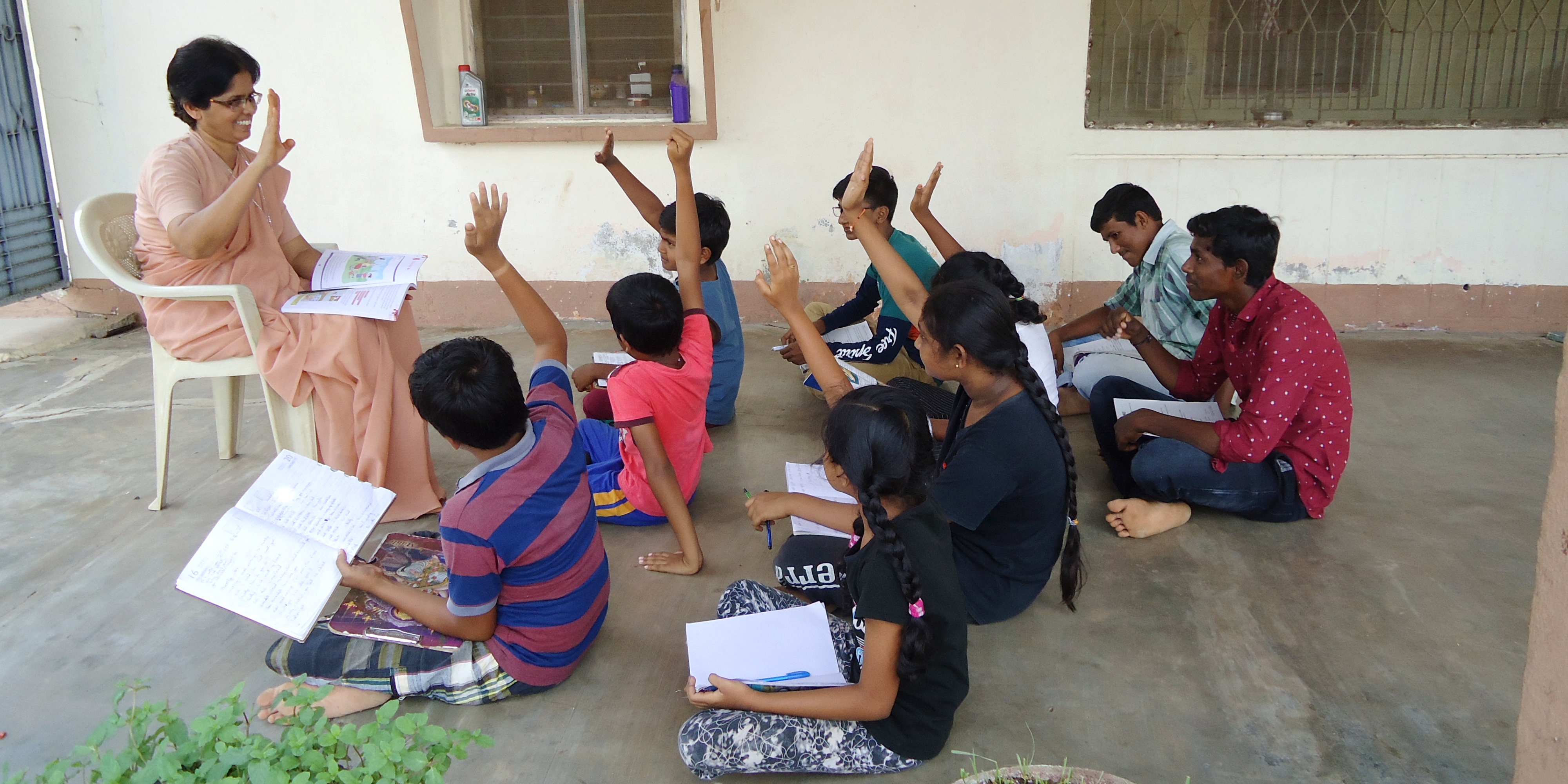
In the month of May 2019, we started our apostolate in a new place called Bhuvanapalli. It is located in the West Godavari district of Andhra Pradesh. It comes under the jurisdiction of the Diocese of Eluru. It is a beautiful green place surrounded by paddy fields and fish ponds. In our campus we have the Parish church, the parochial house,a school and a small convent. There are a very few Catholic families nearby but there are families belonging to various Christian denominations. The parish has 14 mission centres in the villages.
Three of us are rendering our service as teachers in the Parish school of the diocese “Infant Jesus English Medium High School ,Bhuvanapalli.” We have 430 children from K.G (kindergarten) to class 10.The children come from far away villages and from poor families.Most of their parents are daily wage earners and illiterates. As a result they don’t get a conducive learning environment and encouragement from their parents. There is a greater need to visit the families of our students in the villages and give them guidance and encouragement to come to school regularly.
As the whole the world is undergoing the effect of Corona virus in one way or the other, Mr. Jagan Mohan Reddy the Chief Minister of Andhra Pradesh has divided the areas of the entire state in to 3 zones based on the number of cases of the covid-19 in order to combat the pandemic in a better way. For this purpose he has deployed volunteers, and health workers to identify the cases and bring to the notice of the health department. The three zones are Red, yellow and green. In Red zones, the positive cases of Covid-19 are more in number. Here the strict rules of the lock down are being followed. In the yellow zones where there are a few positive cases of Covid-19, care is being taken to curb the widespread of the pandemic. And the Green zone is free from corona. But here too we follow the rules of the lock down. We are in the green zone.
Due to the lock down the schools remain closed. We are uncertain as to when the schools will be reopened. As most of our students are from remote villages they don’t have access to proper network facilities and digital gadgets for online classes. So it is the need of the hour for us to find ways and means to guide our students academically. To meet this end we created whatsapp group for each class to send work sheets and to indicate the material to be studied on daily basis.
We are trying to send the work for all. Each classteacher is responsible to send the worksheet in whatsapp. As most of our students are from remote villages and they don’thave access to proper network facilities and digital gadgets for online classes, we are not able to help them. When we reopen the school we have to find ways to help them. But we are also trying to ask the children from nearby villages who are receiving the work to share what they have received. We send them the materials from the work book.We can only write, study chapter.. so and so..and we give some project work , maps etc. they do it and send it to us. Some are doing well.We have heard that we will not have any holidays that we used to get for Hindu fastivals and also for Christmas. So, we will be able complete the lessons.The teachers are doing their best. We remind them everyday to do the needful. There is a great collaboration among teachers.We also help the children of our vicinity to learn spoken English.
Olivia
Three of us are rendering our service as teachers in the Parish school of the diocese “Infant Jesus English Medium High School ,Bhuvanapalli.” We have 430 children from K.G (kindergarten) to class 10.The children come from far away villages and from poor families.Most of their parents are daily wage earners and illiterates. As a result they don’t get a conducive learning environment and encouragement from their parents. There is a greater need to visit the families of our students in the villages and give them guidance and encouragement to come to school regularly.
As the whole the world is undergoing the effect of Corona virus in one way or the other, Mr. Jagan Mohan Reddy the Chief Minister of Andhra Pradesh has divided the areas of the entire state in to 3 zones based on the number of cases of the covid-19 in order to combat the pandemic in a better way. For this purpose he has deployed volunteers, and health workers to identify the cases and bring to the notice of the health department. The three zones are Red, yellow and green. In Red zones, the positive cases of Covid-19 are more in number. Here the strict rules of the lock down are being followed. In the yellow zones where there are a few positive cases of Covid-19, care is being taken to curb the widespread of the pandemic. And the Green zone is free from corona. But here too we follow the rules of the lock down. We are in the green zone.
Due to the lock down the schools remain closed. We are uncertain as to when the schools will be reopened. As most of our students are from remote villages they don’t have access to proper network facilities and digital gadgets for online classes. So it is the need of the hour for us to find ways and means to guide our students academically. To meet this end we created whatsapp group for each class to send work sheets and to indicate the material to be studied on daily basis.
We are trying to send the work for all. Each classteacher is responsible to send the worksheet in whatsapp. As most of our students are from remote villages and they don’thave access to proper network facilities and digital gadgets for online classes, we are not able to help them. When we reopen the school we have to find ways to help them. But we are also trying to ask the children from nearby villages who are receiving the work to share what they have received. We send them the materials from the work book.We can only write, study chapter.. so and so..and we give some project work , maps etc. they do it and send it to us. Some are doing well.We have heard that we will not have any holidays that we used to get for Hindu fastivals and also for Christmas. So, we will be able complete the lessons.The teachers are doing their best. We remind them everyday to do the needful. There is a great collaboration among teachers.We also help the children of our vicinity to learn spoken English.
Olivia
- Details
- Hits: 1158
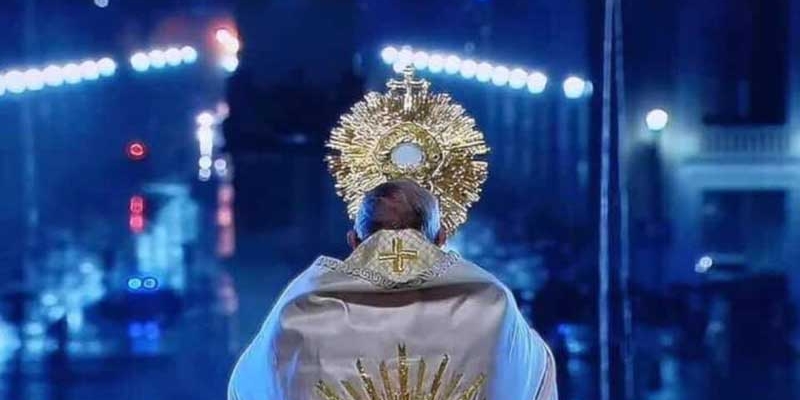
When Pope Francis, on the evening of March 27, summoned us all for a silent prayer, with Eucharistic adoration, he put in the blessing with the monstrance all the faith of the Church, which was able to receive the plenary indulgence from Jesus, God with us in the Eucharist. Even in these difficult times the Eucharist is celebrated in the world, but sacramentally it cannot easily reach the faithful.
Yet there were also those who then protested the absence of the technical formula for plenary indulgence. Come to think of it, I find that Pope Francis simply reminded us of his function as vicar of the One who through the sacraments makes us partakers of His life.
The intensity of the vicar's plea carried the pain and love, bewilderment and needs of the world before the Lord, and granting the faithful "plenary indulgence in the form established by the Church" - as was announced by the voice of card. Comastri - made the gift of mercy to be shared with others flow directly from the heart of Christ: "Freely you have received, give freely" (Mt 10: 8).
Jesus also says to us, as to the Samaritan woman: "It is I who speak to you!" (Jn 4,26). Let's not stop at the external forms, at the places to which we are affectionately linked ("is it here or there that we have to worship?", Cf. v. 20): we might lose sight of the Savior, who wants to speak to us and looks for places and circumstances through which to be close to us even in the anxieties of this time.
The silence of the Eucharist makes to hush up the chatter and the controversies that intoxicate energies and waste time, urges us to be more collaborative in the daily worries and dramas caused by social distancing and more alert in recognizing the voice of Christ in amazing solidarity and self-denial of many heroes of daily duty: "It is I who speak to you!" Indeed, he himself is the "hour" of the meeting "in spirit and truth"; in which, beyond human schemes and words, adoration puts us face to face with the Father, as the Father wants (Jn 4:23): "This is my Son, the beloved: listen to him" ( Mk 9,7).
Yet there were also those who then protested the absence of the technical formula for plenary indulgence. Come to think of it, I find that Pope Francis simply reminded us of his function as vicar of the One who through the sacraments makes us partakers of His life.
The intensity of the vicar's plea carried the pain and love, bewilderment and needs of the world before the Lord, and granting the faithful "plenary indulgence in the form established by the Church" - as was announced by the voice of card. Comastri - made the gift of mercy to be shared with others flow directly from the heart of Christ: "Freely you have received, give freely" (Mt 10: 8).
Jesus also says to us, as to the Samaritan woman: "It is I who speak to you!" (Jn 4,26). Let's not stop at the external forms, at the places to which we are affectionately linked ("is it here or there that we have to worship?", Cf. v. 20): we might lose sight of the Savior, who wants to speak to us and looks for places and circumstances through which to be close to us even in the anxieties of this time.
The silence of the Eucharist makes to hush up the chatter and the controversies that intoxicate energies and waste time, urges us to be more collaborative in the daily worries and dramas caused by social distancing and more alert in recognizing the voice of Christ in amazing solidarity and self-denial of many heroes of daily duty: "It is I who speak to you!" Indeed, he himself is the "hour" of the meeting "in spirit and truth"; in which, beyond human schemes and words, adoration puts us face to face with the Father, as the Father wants (Jn 4:23): "This is my Son, the beloved: listen to him" ( Mk 9,7).
- Details
- Hits: 1233
From the very beginning of the human existence God keeps asking the question: “Where are you?” (Gen 3:9).
Lent is given us as the time to restore the connection from “God’s passionate will to dialogue with his children”, as the Pope Francis tells us in his Message for Lent 2020.It is all about giving our answers and revitalise our questions.
God’s Word provokes us and shows His expectations and projects. He gives us questions which aim is to overcome our fears, distrusts and laziness. The answers are not all written in the Bible, but they have to be given by each person him or herself. “Whoever has ears to hear ought to hear” (Mrk 4:9): only the one who makes space for the other who speaks, can give such answers.
Looking at the circumstances of a personal and collective life we can see that they urge us to restore our relations with the whole humanity, which is made in the image of God Trinity. We are called to become similar to Him, being able to use our liberty to create dialogue, which is not homologating, but open to the other.
40 days of Israel walking through the desert become the metaphor of our life. Sometimes it is contorted and very difficult, sometimes, though, it is driven by the experience of love which seems to be all around.
“The fact that the Lord once again offers us a favourable time for our conversion should never be taken for granted. This new opportunity ought to awaken in us a sense of gratitude and stir us from our sloth. Despite the sometimes tragic presence of evil in our lives, and in the life of the Church and the world, this opportunity to change our course expresses God’s unwavering will not to interrupt his dialogue of salvation with us” (pope Francis, Message for Lent 2020).
Lent is given us as the time to restore the connection from “God’s passionate will to dialogue with his children”, as the Pope Francis tells us in his Message for Lent 2020.It is all about giving our answers and revitalise our questions.
God’s Word provokes us and shows His expectations and projects. He gives us questions which aim is to overcome our fears, distrusts and laziness. The answers are not all written in the Bible, but they have to be given by each person him or herself. “Whoever has ears to hear ought to hear” (Mrk 4:9): only the one who makes space for the other who speaks, can give such answers.
Looking at the circumstances of a personal and collective life we can see that they urge us to restore our relations with the whole humanity, which is made in the image of God Trinity. We are called to become similar to Him, being able to use our liberty to create dialogue, which is not homologating, but open to the other.
40 days of Israel walking through the desert become the metaphor of our life. Sometimes it is contorted and very difficult, sometimes, though, it is driven by the experience of love which seems to be all around.
“The fact that the Lord once again offers us a favourable time for our conversion should never be taken for granted. This new opportunity ought to awaken in us a sense of gratitude and stir us from our sloth. Despite the sometimes tragic presence of evil in our lives, and in the life of the Church and the world, this opportunity to change our course expresses God’s unwavering will not to interrupt his dialogue of salvation with us” (pope Francis, Message for Lent 2020).

- Details
- Hits: 1249
The beautiful and profound passage of the Gospel that the liturgy of Christmas Eve offered us for meditation and preparation for the event of the Holy Night, can guide us in retracing the journey we have made and we are yet to make. We read in the words of the prophet Zechariah, who outlines the vocation of his son John the Baptist, the invitation of Jesus to read the events of history with the light of faith and to discover in every present and future event the presence of God in the midst of his people.
In the wonderful synthesis that flows from the heart of Zechariah concerning the mystery of God present in every event in history we can find a life program for each of us.
I note only some interior attitude to which the advent has insistently called us to help us prepare the welcome of Jesus within us.
1. Need to praise and bless God for the gift of salvation
First of all, the need to praise and bless God because he visited and redeemed his people.
The reasons for the praise: he exercised his power through the investiture of men of this people, called to collaborate over time on his plan for the salvation of man.
2. The path of promise and justification
The promise of the Lord comes from afar; spans centuries of human history; it is renewed every time the man finds himself in the risk of succumbing to any type of difficulty.
Zechariah reminds us that the promise originates from the Mercy of God who wants to save his people, it is not his merits that save him, and yet God wants to have man as collaborator. Man receives the mandate and receives the strength from God to be able to implement it. Man can remain faithful to the promise of salvation only if he remembers that he cannot do anything alone. God is his only strength not to succumb to evil.
Abraham, the progenitor of all believers, believed the promise without resisting. He opened himself to the merciful love of God without demanding sure proofs and without relying on human certainties. He answers the call leaving his land and trusting the promise made to him and his descendants. For this he deserved the title of Father of all in faith. Righteous man par excellence because he abandoned himself to the will of God without hesitation and placed the whole plan of life in the will of God.
The righteous man is someone who lives by faith and performs the will of God without resistance.
The path that the chosen people make begins with an act of faith.
3.The stages of realization of the promise
The liturgy has made us review them in the past few weeks. These are stages that materialize in the human events of a people who, despite the promises, experience falls and betrayals. The presence of God is made manifest by the call of men chosen by God and sent to help us read the ways of conversion and return to the Lord with eyes of faith. In this project of the love of God, it is evident the voice of the prophets, in particular Isaiah, who kept us company for a long time to awaken in our hearts the desire of God, the certainty of his love for us, the way to return to Him and the joy to be able to feel it present among us.
We must gratefully recognize with how much suffering and with what painful sacrifice the prophets have fulfilled the task of keeping the approach of the fulfillment of salvation awake in the minds of the people, and this not only for their people, but for all men.
4. The fulfillment of the promise through the voice of Zechariah
The canticle of Zechariah somehow closes the cycle of waiting for the promise and announces its fulfillment, acknowledging to the son that God had granted him to have in his old age and in that of his wife Elizabeth the task of paving the way for Jesus who is about to trample, like God-man, the ways of Palestine. The gaze is turned to the Son of the promise, but the content already concerns events that are human and divine at the same time; John's task is to open the roads, but to let the one "who is greater than him" pass.
From the liturgy of this day we move to that of this night. In the last week we have been repeatedly called to listen to the voice of Mary and Elizabeth, and the dialogue without voice but implemented in the Word between the two unborn children - Jesus and John, an anticipation of the mystery that we contemplate tonight.
Human and divine intertwine in an inextricable way, God enters humanity to redeem it, Mary offered her womb to the Son of God to prepare a welcome of total communion with her soul and invites us to imitate her to substitute with human warmth the coldness of the hut in Bethlehem.
My wish is that we can live this period with the sentiments of Mary, with her faith, hope and charity, to firmly believe that God has also given us perhaps a small part in announcing to the world the birth of the Son of God and to convince us that He is always with us; therefore, nothing of what happens can separate us from his love.
In the wonderful synthesis that flows from the heart of Zechariah concerning the mystery of God present in every event in history we can find a life program for each of us.
I note only some interior attitude to which the advent has insistently called us to help us prepare the welcome of Jesus within us.
1. Need to praise and bless God for the gift of salvation
First of all, the need to praise and bless God because he visited and redeemed his people.
The reasons for the praise: he exercised his power through the investiture of men of this people, called to collaborate over time on his plan for the salvation of man.
2. The path of promise and justification
The promise of the Lord comes from afar; spans centuries of human history; it is renewed every time the man finds himself in the risk of succumbing to any type of difficulty.
Zechariah reminds us that the promise originates from the Mercy of God who wants to save his people, it is not his merits that save him, and yet God wants to have man as collaborator. Man receives the mandate and receives the strength from God to be able to implement it. Man can remain faithful to the promise of salvation only if he remembers that he cannot do anything alone. God is his only strength not to succumb to evil.
Abraham, the progenitor of all believers, believed the promise without resisting. He opened himself to the merciful love of God without demanding sure proofs and without relying on human certainties. He answers the call leaving his land and trusting the promise made to him and his descendants. For this he deserved the title of Father of all in faith. Righteous man par excellence because he abandoned himself to the will of God without hesitation and placed the whole plan of life in the will of God.
The righteous man is someone who lives by faith and performs the will of God without resistance.
The path that the chosen people make begins with an act of faith.
3.The stages of realization of the promise
The liturgy has made us review them in the past few weeks. These are stages that materialize in the human events of a people who, despite the promises, experience falls and betrayals. The presence of God is made manifest by the call of men chosen by God and sent to help us read the ways of conversion and return to the Lord with eyes of faith. In this project of the love of God, it is evident the voice of the prophets, in particular Isaiah, who kept us company for a long time to awaken in our hearts the desire of God, the certainty of his love for us, the way to return to Him and the joy to be able to feel it present among us.
We must gratefully recognize with how much suffering and with what painful sacrifice the prophets have fulfilled the task of keeping the approach of the fulfillment of salvation awake in the minds of the people, and this not only for their people, but for all men.
4. The fulfillment of the promise through the voice of Zechariah
The canticle of Zechariah somehow closes the cycle of waiting for the promise and announces its fulfillment, acknowledging to the son that God had granted him to have in his old age and in that of his wife Elizabeth the task of paving the way for Jesus who is about to trample, like God-man, the ways of Palestine. The gaze is turned to the Son of the promise, but the content already concerns events that are human and divine at the same time; John's task is to open the roads, but to let the one "who is greater than him" pass.
From the liturgy of this day we move to that of this night. In the last week we have been repeatedly called to listen to the voice of Mary and Elizabeth, and the dialogue without voice but implemented in the Word between the two unborn children - Jesus and John, an anticipation of the mystery that we contemplate tonight.
Human and divine intertwine in an inextricable way, God enters humanity to redeem it, Mary offered her womb to the Son of God to prepare a welcome of total communion with her soul and invites us to imitate her to substitute with human warmth the coldness of the hut in Bethlehem.
My wish is that we can live this period with the sentiments of Mary, with her faith, hope and charity, to firmly believe that God has also given us perhaps a small part in announcing to the world the birth of the Son of God and to convince us that He is always with us; therefore, nothing of what happens can separate us from his love.

- Details
- Hits: 1406
An educator versus a bad behaved girl. The first one wants to teach something, the second one wants everything as she wishes. The educator uses all the means possible. The girl though behaves like a little terrorist or a wild animal from the bushes. Sounds familiar? No, it is not a description of a lesson at school.
The film entitled “The Miracle Worker” form 1962 shows a true story of Hellen Keller, a deaf- mute and blind girl and her teacher. We cannot really say who is the main hero – Annie Sullivan, the teacher, a strong and stubborn woman, who has just finished education herself , or maybe a 7-year-old child, who is as stubborn and intelligent as her new teacher. The whole film presents a continuous battle between the two of them.The movie can be the basis for the reflection on various aspects of teaching, child’s behaviour, handicaps, communication, etc. I would like to focus only on one of them.
I’ve been working with children for about 10 years. I’ve been teaching in kindergartens, private and public schools, and wherever I was, I’ve seen the same problem. There has always been a kid or two who were in certain aspects similar to Hellen – closed in their worlds, but at the same time trying really hard to communicate with others. Unfortunately, unable to do it in a conventional way, they use the only means that is effective for them – misbehaving.
There are innumerate titles of books and articles about misbehavior and its causes. It can be the lack of education as such, missing parents, overprotecting parents, TV, video games, the Internet, lack of movement or incompetent teachers. The list is long and everyone can add their own idea. Probably each one of them has got some truth. But that is the world now and we cannot just make a fence around ourselves and pretend it does not exist. We can change our small world close to us, but we will not change our neighbor and his ways of raising up his kids. I will not be able to choose children to be in my class either. Nor I will be able to sterilize the space around me from those impacts. Mission impossible?
Annie Sullivan could also think like that. She was literally trying to use all means to tame Hellen. Sometimes she even used means that today would put her into big troubles with law and organisations specialised in the protection of children's rights. That time (the end of the 19th century) she did not have to worry about that and at certain point she was able to make the girl behave like a civilized human being. Helen started eating with a fork from her own plate, stopped screaming when she wanted to get something and started to comb herself and wear clan dresses. How many times I’ve had this thought during a difficult lesson: I wish Mike behaved normal just for 5 minutes, or just till the end of the lesson Ann stopped talking and sit still. Would it work? Maybe for that 5 minutes. Annie intuited that those kind of changes in behavior would never be true, because they are based on taming, forcing. Initially it can be helpful, we have to start from something. But while reflecting on this the Platoe’s Cave came into my mind. Me – the teacher, I will set you free and lead you to the gates of the real world. It will not work properly. The pupil will soon come back to where he came from, because it is familiar to him. The real escape from the cave can occur only when the pupil on his own will set himself free from the chains, then stand up, turn around and start walking. The educator is needed as a companion, but he cannot make this “click” in the student. This happens only in and by the student him or herself. It is a kind of a miracle. It can be explained on the bases of an example. Imagine somebody wants to explain us a riddle. He/ she tries to explain it 4-5 times, each time in a different way and we still cannot understand it. Suddenly something “clicks”. Eureka! We got it, and we do not know how and why it had been impossible earlier. The teacher is important a lot, he/she explains, gives arguments, bases or conditions for making it possible to understand. But he/she cannot force this “jump” to happen, just needs to be there, patient, accompanying, supporting, always trying, because it is never clear when this miracle will happen. The film shows it in a perfect way, that is why each educator should see it.
Where should we look for the forces to be such a patient supporter who always keeps trying? I think that for us, Christians, the answer is one. Although it is not always the simplest one. Sometimes we lack patience because “it is easier the other way”, “I don’t have time”, “it’s pointless”, “there are still 20 other kids”… However, despite discouragement that comes and goes away, we need to believe that it is worth it. Jesus also “sowed” and kept walking. Sometimes the Word was wasted, but let us see how much of it remained and now, 2000 years later, keeps giving the fruit? Being a teacher without this faith, that one day something can “click”, is pointless. And who knows how many times a mediocre teacher has become “a miracle worker” without even knowing?
The film entitled “The Miracle Worker” form 1962 shows a true story of Hellen Keller, a deaf- mute and blind girl and her teacher. We cannot really say who is the main hero – Annie Sullivan, the teacher, a strong and stubborn woman, who has just finished education herself , or maybe a 7-year-old child, who is as stubborn and intelligent as her new teacher. The whole film presents a continuous battle between the two of them.The movie can be the basis for the reflection on various aspects of teaching, child’s behaviour, handicaps, communication, etc. I would like to focus only on one of them.
I’ve been working with children for about 10 years. I’ve been teaching in kindergartens, private and public schools, and wherever I was, I’ve seen the same problem. There has always been a kid or two who were in certain aspects similar to Hellen – closed in their worlds, but at the same time trying really hard to communicate with others. Unfortunately, unable to do it in a conventional way, they use the only means that is effective for them – misbehaving.
There are innumerate titles of books and articles about misbehavior and its causes. It can be the lack of education as such, missing parents, overprotecting parents, TV, video games, the Internet, lack of movement or incompetent teachers. The list is long and everyone can add their own idea. Probably each one of them has got some truth. But that is the world now and we cannot just make a fence around ourselves and pretend it does not exist. We can change our small world close to us, but we will not change our neighbor and his ways of raising up his kids. I will not be able to choose children to be in my class either. Nor I will be able to sterilize the space around me from those impacts. Mission impossible?
Annie Sullivan could also think like that. She was literally trying to use all means to tame Hellen. Sometimes she even used means that today would put her into big troubles with law and organisations specialised in the protection of children's rights. That time (the end of the 19th century) she did not have to worry about that and at certain point she was able to make the girl behave like a civilized human being. Helen started eating with a fork from her own plate, stopped screaming when she wanted to get something and started to comb herself and wear clan dresses. How many times I’ve had this thought during a difficult lesson: I wish Mike behaved normal just for 5 minutes, or just till the end of the lesson Ann stopped talking and sit still. Would it work? Maybe for that 5 minutes. Annie intuited that those kind of changes in behavior would never be true, because they are based on taming, forcing. Initially it can be helpful, we have to start from something. But while reflecting on this the Platoe’s Cave came into my mind. Me – the teacher, I will set you free and lead you to the gates of the real world. It will not work properly. The pupil will soon come back to where he came from, because it is familiar to him. The real escape from the cave can occur only when the pupil on his own will set himself free from the chains, then stand up, turn around and start walking. The educator is needed as a companion, but he cannot make this “click” in the student. This happens only in and by the student him or herself. It is a kind of a miracle. It can be explained on the bases of an example. Imagine somebody wants to explain us a riddle. He/ she tries to explain it 4-5 times, each time in a different way and we still cannot understand it. Suddenly something “clicks”. Eureka! We got it, and we do not know how and why it had been impossible earlier. The teacher is important a lot, he/she explains, gives arguments, bases or conditions for making it possible to understand. But he/she cannot force this “jump” to happen, just needs to be there, patient, accompanying, supporting, always trying, because it is never clear when this miracle will happen. The film shows it in a perfect way, that is why each educator should see it.
Where should we look for the forces to be such a patient supporter who always keeps trying? I think that for us, Christians, the answer is one. Although it is not always the simplest one. Sometimes we lack patience because “it is easier the other way”, “I don’t have time”, “it’s pointless”, “there are still 20 other kids”… However, despite discouragement that comes and goes away, we need to believe that it is worth it. Jesus also “sowed” and kept walking. Sometimes the Word was wasted, but let us see how much of it remained and now, 2000 years later, keeps giving the fruit? Being a teacher without this faith, that one day something can “click”, is pointless. And who knows how many times a mediocre teacher has become “a miracle worker” without even knowing?