- Details
- Hits: 1297
The letter of the Congregation for the Doctrine of the Faith sent by the bishops on 1st of August 2018 shows the modification of the article 2267 of the Catechism of the Catholic Church. It was done thanks to the pope Francis. However, the first ideas appeared already in the teaching of John Paul II (starting from the encyclical Evangelium Vitae, No 27), and were continued by Benedict XVI, who also recalled the topic at the end of the Audience on 30th November 2011 in the greetings in English.
It is the continuous movement of the Church towards better understanding. As Jesus has promised: “The Spirit of truth will guide you into all the truth” (John 16:13)! Light that enlightens also the mist and the violence of our time: one more time, it is the joy of the Gospel!
It is the continuous movement of the Church towards better understanding. As Jesus has promised: “The Spirit of truth will guide you into all the truth” (John 16:13)! Light that enlightens also the mist and the violence of our time: one more time, it is the joy of the Gospel!

- Details
- Hits: 1191
The Church in different cultures, competences and generational circles prepares herself with prayer and reflection on the work of the XV Ordinary Assembly of the Synod of Bishops (Vatican City, 3-28 October 2018). In order to speak to and about the youth in a concrete way Pope Francis and the Bishops listened to their questions, difficulties, proposals and to their silence as well. They did this not only through seminars and documents of experts but also and above all starting from their answers to the online questionnaire (June 14 – Dec. 31, 2017) and from the various interventions from young people all over the world who attended the pre-synod meeting held from March 19 - 24, 2018. The final document of this meeting was presented to the Pope on Palm Sunday 2018. The experts who prepared the Working Document (Instrumentum laboris), which was presented to the public on June 21, 2018 – feast day of the Patron Saint of youth Aloysius Gonzaga – could draw from different sources numerous ideas and solicitations gathered in a document that will serve as a starting point for the work of the Synod Assembly.
These two documents, which gather respectively the voice of young people and the reflections of experts who confronted them, can be useful for all of us to accompany with prayer and commitment the service of the Church towards new generations. If the problems prove complex, friendship is always the strongest need that cannot be deferred even in intergenerational relations. In the family, at school and at university, in parishes, in the workplaces or in free time, young people ask for attention and trust to find their space in the society and share their responsibilities towards future generations.

- Details
- Hits: 1716
«But, Lord, why do you intend to show yourself to us and not to the world?» (Jn 14:22).
I often ask myself the same question. My world, postmodern culture, people I meet actually in my days find it difficult to believe: there is no lack of curiosity about singular or paranormal facts, but it seems hard to trust totally in Him who is our source and the estuary of our life. Faith looks “intriguing” today – in the etymological sense, paradoxically – to those who feel blackmailed and somehow “ensnared” by unresolved existential angst or threatened by dogmatic assertions that appear as detached from everyday reality. So a modern icon of Jesus calling Peter and Andrew, based on a famous mosaic of Monreale, shows the odd innovation of the big net, that seems to wrap up the two fishermen at a time when they are just called to trust Jesus (Mt 1:15-20).
An official of Capernaum had nothing in his heart but anguish over his sick child; Jesus told him: «Unless you people see signs and wonders, you will never believe» (Jn 4:48). Nevertheless He managed to turn the wonder into a sign to be just that, namely a signal pointing to Him: all the official got was a promise («your son will live»), an answer in half-light, moving or soliciting the faith; but «the man took Jesus at his word and departed» (Jn 4:50).
Different are the dynamics of Jesus encounter with the leper, at least that’s how we find the story told in the Mark’s Gospel (Mk 1:40-45): «If you are willing, you can make me clean»; «I am willing», Jesus said (… but what do you really will? Do you want Me to be your Saviour? do you want to know Me, to entrust your life to Me, do you? Or do you want nothing but be fine in your own way?). Healing occurs just the same, but it is a “fact”, an event (temporary, because man is mortal), it is not a meeting of two persons, not a discovery of the Other.
Jesus «sternly warned» the healed leper, sending him to the priest (who had just had the assignment to certify healing). The Evangelist sharply adds: «Instead he went out» (Jesus didn’t tell him to go away, to distance himself from His person) «and began to talk freely, spreading the news» about the fact: just nothing more than “a fact”. He had nothing else to divulge, which is why Jesus ordered him not to say anything to anyone: in his account, healing would have been nothing more than a wonder, it would draw huge crowds, in need of the miracle worker (Lk 5:15 is more optimistic: «crowds of people came to hear him and to be healed of their sicknesses»). But Jesus was wishing for “signs” to be authentic signals, that lead to the friendship with Him, not for portents that draw crowds eager to be moved seeing «some sign performed by Him», like king Herod, to whom Jesus gave no answer (Lk 23:8-9): without an encounter between persons, dialogue is not possible.
«But, Lord, why …?». At the last supper Jesus speaks, painfully, about the one who didn’t know Him because wasn’t capable to see Him really, stopping at the things that happened, at the “facts”. With his friends, nevertheless, Jesus shares his personal concern for failed friends. «If anyone loves me …» (Jn 14:23), so the dynamics of friendship sets off: that involves us in the familiarity of the Son with the Father and spreads, in the time of Church, by involvement of/thanks to the Holy Spirit (Jn 14:25).
Nevertheless, one of the friends of Jesus, Jude Thaddeus, had realized a strangeness: sometimes Jesus seemed to arrange so that He would do anything for not to be understood! «But, Lord, why …?». Certain things the Master spoke in parables, He adorned them with some stories that entertained the listeners but didn’t “capture” them like the miracles, that at least moved the crowds to search him; later He explained these parables only to his friends, to those who already loved him and therefore tried to put into practice each word, hearing the Father’s voice resonating (cf. Jn 14:23).
In a little book on Jesus Christ (1966) Yves Congar, looking for hunches of Pascal and Kierkegaard, seizes the finesse with which God wants to reveal himself to those who – even and especially in the modern world – find it difficult to believe or are not interested in putting themselves out there, facing a path of decisions. In the “dialogical structure of the revelation” there is a “chiaroscuro” of signs or parables, in which “God presents his message so that one might have some reason for not understanding and rejecting Him, but at the same time a real chance to acknowledge and accept”.
«Whoever has ears to hear ought to hear» (Lk 8:8): it can happen to anyone, that in different moments of life, the sense to listen can be lowered, for the shallowness of the routine and in the midst of all that’s likely to mislead our attention. Parable may open the way to the decisions of faith: if it doesn’t find us attentive, it will be, however, a signal of love that is waiting for chance to reoccur in another way, with new opportunities to meet.
However, God doesn’t wish to be ill-timed, He doesn’t want to risk rejection. So, taking care of those who didn’t accept his teachings and misunderstood his “signs” (Jn 12:37), Jesus recontextualizes (Mk 4:11-12; Lk 8:10; Jn 12:40) the words of Is 6:9-10: Mt 13:13-15 shows their fulfilment through a reinterpretation of the prophetic text: when his listeners can’t decide for God, directing their attention to Him, it is better that, for the moment, «they look but do not see and hear but do not listen or understand», if they still can’t be converted and receive forgiveness. But when we are able to fully listen, namely we really «stop, whatch, come back» (as pope Francis suggested during the Mass on Ash Wednesday), «knowledge of the mysteries of the kingdom of heaven» can be granted to us (Mt 13:11). That is the amazing experience of how the Lord is working in history, because even after the Ascension Jesus is with us «every day, until the end of the age», or better «until the implementation of the αἰών» (Mt 28:20), that is “until the full achievement of the eternity”.
But it is a path where God respects timeline of man, even if He doesn’t stop soliciting his free decision: that’s love asking for love.
I often ask myself the same question. My world, postmodern culture, people I meet actually in my days find it difficult to believe: there is no lack of curiosity about singular or paranormal facts, but it seems hard to trust totally in Him who is our source and the estuary of our life. Faith looks “intriguing” today – in the etymological sense, paradoxically – to those who feel blackmailed and somehow “ensnared” by unresolved existential angst or threatened by dogmatic assertions that appear as detached from everyday reality. So a modern icon of Jesus calling Peter and Andrew, based on a famous mosaic of Monreale, shows the odd innovation of the big net, that seems to wrap up the two fishermen at a time when they are just called to trust Jesus (Mt 1:15-20).
An official of Capernaum had nothing in his heart but anguish over his sick child; Jesus told him: «Unless you people see signs and wonders, you will never believe» (Jn 4:48). Nevertheless He managed to turn the wonder into a sign to be just that, namely a signal pointing to Him: all the official got was a promise («your son will live»), an answer in half-light, moving or soliciting the faith; but «the man took Jesus at his word and departed» (Jn 4:50).
Different are the dynamics of Jesus encounter with the leper, at least that’s how we find the story told in the Mark’s Gospel (Mk 1:40-45): «If you are willing, you can make me clean»; «I am willing», Jesus said (… but what do you really will? Do you want Me to be your Saviour? do you want to know Me, to entrust your life to Me, do you? Or do you want nothing but be fine in your own way?). Healing occurs just the same, but it is a “fact”, an event (temporary, because man is mortal), it is not a meeting of two persons, not a discovery of the Other.
Jesus «sternly warned» the healed leper, sending him to the priest (who had just had the assignment to certify healing). The Evangelist sharply adds: «Instead he went out» (Jesus didn’t tell him to go away, to distance himself from His person) «and began to talk freely, spreading the news» about the fact: just nothing more than “a fact”. He had nothing else to divulge, which is why Jesus ordered him not to say anything to anyone: in his account, healing would have been nothing more than a wonder, it would draw huge crowds, in need of the miracle worker (Lk 5:15 is more optimistic: «crowds of people came to hear him and to be healed of their sicknesses»). But Jesus was wishing for “signs” to be authentic signals, that lead to the friendship with Him, not for portents that draw crowds eager to be moved seeing «some sign performed by Him», like king Herod, to whom Jesus gave no answer (Lk 23:8-9): without an encounter between persons, dialogue is not possible.
«But, Lord, why …?». At the last supper Jesus speaks, painfully, about the one who didn’t know Him because wasn’t capable to see Him really, stopping at the things that happened, at the “facts”. With his friends, nevertheless, Jesus shares his personal concern for failed friends. «If anyone loves me …» (Jn 14:23), so the dynamics of friendship sets off: that involves us in the familiarity of the Son with the Father and spreads, in the time of Church, by involvement of/thanks to the Holy Spirit (Jn 14:25).
Nevertheless, one of the friends of Jesus, Jude Thaddeus, had realized a strangeness: sometimes Jesus seemed to arrange so that He would do anything for not to be understood! «But, Lord, why …?». Certain things the Master spoke in parables, He adorned them with some stories that entertained the listeners but didn’t “capture” them like the miracles, that at least moved the crowds to search him; later He explained these parables only to his friends, to those who already loved him and therefore tried to put into practice each word, hearing the Father’s voice resonating (cf. Jn 14:23).
In a little book on Jesus Christ (1966) Yves Congar, looking for hunches of Pascal and Kierkegaard, seizes the finesse with which God wants to reveal himself to those who – even and especially in the modern world – find it difficult to believe or are not interested in putting themselves out there, facing a path of decisions. In the “dialogical structure of the revelation” there is a “chiaroscuro” of signs or parables, in which “God presents his message so that one might have some reason for not understanding and rejecting Him, but at the same time a real chance to acknowledge and accept”.
«Whoever has ears to hear ought to hear» (Lk 8:8): it can happen to anyone, that in different moments of life, the sense to listen can be lowered, for the shallowness of the routine and in the midst of all that’s likely to mislead our attention. Parable may open the way to the decisions of faith: if it doesn’t find us attentive, it will be, however, a signal of love that is waiting for chance to reoccur in another way, with new opportunities to meet.
However, God doesn’t wish to be ill-timed, He doesn’t want to risk rejection. So, taking care of those who didn’t accept his teachings and misunderstood his “signs” (Jn 12:37), Jesus recontextualizes (Mk 4:11-12; Lk 8:10; Jn 12:40) the words of Is 6:9-10: Mt 13:13-15 shows their fulfilment through a reinterpretation of the prophetic text: when his listeners can’t decide for God, directing their attention to Him, it is better that, for the moment, «they look but do not see and hear but do not listen or understand», if they still can’t be converted and receive forgiveness. But when we are able to fully listen, namely we really «stop, whatch, come back» (as pope Francis suggested during the Mass on Ash Wednesday), «knowledge of the mysteries of the kingdom of heaven» can be granted to us (Mt 13:11). That is the amazing experience of how the Lord is working in history, because even after the Ascension Jesus is with us «every day, until the end of the age», or better «until the implementation of the αἰών» (Mt 28:20), that is “until the full achievement of the eternity”.
But it is a path where God respects timeline of man, even if He doesn’t stop soliciting his free decision: that’s love asking for love.
- Details
- Hits: 1717
13 May 2018: World Communications Day
In Christianity, truth is not just a conceptual reality that regards how we judge things, defining them as true or false. The truth is not just bringing to light things that are concealed, "revealing reality", as the ancient Greek term aletheia (from a-lethès, "not hidden") might lead us to believe. Truth involves our whole life. In the Bible, it carries with it the sense of support, solidity, and trust, as implied by the root 'aman, the source of our liturgical expression Amen. Truth is something you can lean on, so as not to fall. In this relational sense, the only truly reliable and trustworthy One – the One on whom we can count – is the living God. Hence, Jesus can say: "I am the truth" (Jn 14:6). We discover and rediscover the truth when we experience it within ourselves in the loyalty and trustworthiness of the One who loves us. This alone can liberate us: "The truth will set you free" (Jn 8:32).
Freedom from falsehood and the search for relationship: these two ingredients cannot be lacking if our words and gestures are to be true, authentic, and trustworthy. To discern the truth, we need to discern everything that encourages communion and promotes goodness from whatever instead tends to isolate, divide, and oppose. Truth, therefore, is not really grasped when it is imposed from without as something impersonal, but only when it flows from free relationships between persons, from listening to one another. Nor can we ever stop seeking the truth, because falsehood can always creep in, even when we state things that are true. An impeccable argument can indeed rest on undeniable facts, but if it is used to hurt another and to discredit that person in the eyes of others, however correct it may appear, it is not truthful. We can recognize the truth of statements from their fruits: whether they provoke quarrels, foment division, encourage resignation; or, on the other hand, they promote informed and mature reflection leading to constructive dialogue and fruitful results.
(pope Francis, Message for World Communications Day, n. 3)
- Details
- Hits: 1573
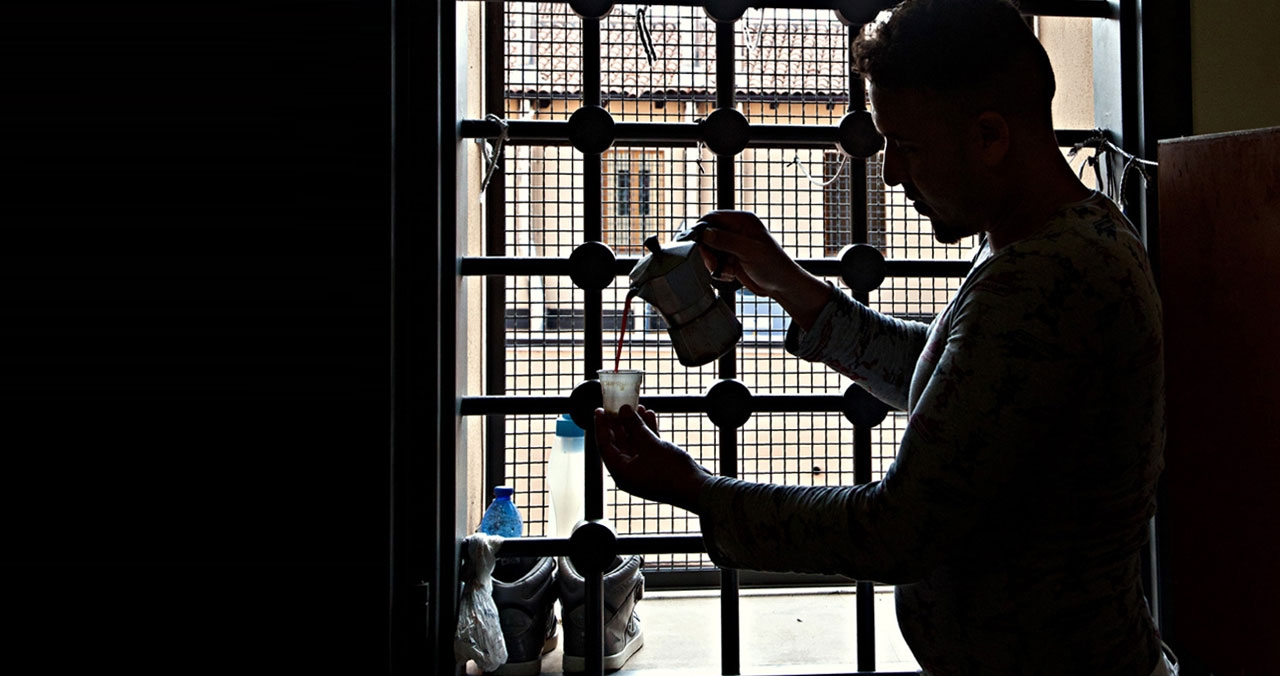
M. was busy filling the application form for obtaining the necessary things for personal hygiene and dress, distributed weekly to the prisoners by a Voluntary Association of Prison ministry where I too render my service.
Looking with the clinical eye of a retired teacher it came spontaneously to me to watch him writing and I observed:
Looking with the clinical eye of a retired teacher it came spontaneously to me to watch him writing and I observed:
«What a beautiful writing! Off this present world of yours, what is your profession?».
«Robber… I have always been a robber».
«Robber… I have always been a robber».
Thinking of one of Toto's films, I commented with a smile:
«What a lovely profession!... Compliments!»
A certain empathy was created among us. He said: «Look at my hands… these cannot be but hands of a robber!». And then snapped: «Well, Madam, I need to work... I have three children already and the fourth one is expected».
Yes… the apparent shell of the role (of a detained robber) is ruptured and there came forth the man, my brother.
And I asked him: «Well, you will not teach your children to rob, right?».
Yes… the apparent shell of the role (of a detained robber) is ruptured and there came forth the man, my brother.
And I asked him: «Well, you will not teach your children to rob, right?».
Roused by the question he retorted: «Never! children should never be used! It’s my duty to work… You know, when it comes to an older person, I go back… the elderly ones are not to be touched!»
Then I said jokingly: «That means I don’t have to worry, right?»
«Why would you? I should just raise a monument to you, for all the good that you do for us! May the Lord reward you!»

- Details
- Hits: 1846
I went to see Lucia - the name is imaginary - at her house. It was a nice experience! No photo to share, nevertheless. Even in the degradation of the urban suburbs, at any latitude, the human shines always of irrepressible light, yet is to be surrounded by much care and respect: it is not an event to make a show off but is the trace of God in the creation where we see the sign of his glory.
In every "soul to soul" encounter, whether in a personal dialogue or in the classroom with my students, everyone grows to be more human. But in the struggle and tenacity of life that challenge even the resignation and despair, the beauty emerges in a way that is surprising and always new.
In every "soul to soul" encounter, whether in a personal dialogue or in the classroom with my students, everyone grows to be more human. But in the struggle and tenacity of life that challenge even the resignation and despair, the beauty emerges in a way that is surprising and always new.
We, Lucia and I, met each other during a brief hospitalization, it was something very causal yet marking God's initiative. She and her friends carry on lightly the difficult path of bureaucracy, the often misguiding directions, unwanted delays, omissions and even injustice which we all encounter in our day to day life; but the so called "unfortunate ones" affected by sickness, poverty or exclusion have to deal with these mechanisms even for the very elementary social assistance.
Yet Lucia and her friends are able to enjoy the small and big joys of life: a good dish to relish, a song or a poem, even a trip to the sea-shore (which apparently seems impossible for a person confined to bed, yet did take place!) and all that is shared in friendship.
The initiative of a friend nurse who after completing his night shift, brought Lucia by surprise even to Vatican, for a lunch with Pope Francis on November 19, 2017.
She likes Pope but has many questions about religion: "There are things about God that I do not understand, I have to think about it". We talk about many things. At the discovery of something about God, she brightens up: a re-discovery of something that has always been hers. Because His daughter she is!
The parish is not far away, and the sound of the bells could be heard quiet strongly. Then I said, «do you know what I saw (written in Latin), while passing in front of the church? “You Christian, recognize your dignity”. It is a famous phrase of Leo the Great». She liked it.
The cabin where she lives is on the ground floor; the only window with railings, is too high to see anything but a portion of the sky; to open it, someone must climb on the bed which she is unable to do. Expressing my displeasure I said, «I'm sorry you cannot see anything» - there isn't much to see though except the concrete walls - and added thoughtlessly, «it's like in a prison». She smiled at it and said : «You don't remember, perhaps, that I was in the jail [in fact she was remunerated as it was an unjust detention, n. d. r.]; there was a window at the eye level and we could see a bit through the bars. But there are prisons worse than that». It was a ward for women who had agreed to detoxify themselves through methadone; and there she took care of another detainee's child: she entertained him as his mother was in a worse state than her.
She spoke to me also about a friend who passed away recently; years ago he and his wife had come to see her when she was hospitalized and he had continued to help her. He was an ex-priest, having grown-up children.
As I was leaving, I remembered the last words of the curate in Bernanos’s novel: «Everything is grace».