- Details
- Hits: 1414
In God, in the Trinity, the second Person is both the Son and the Word, the Word in which the Father expresses Himself in total. He expresses all that He is in the One. The Word replies in the same way – with love, which is the Holy Spirit. This is the Trinity – the action that happens in God, inside the Trinity, in the relation between the Three of Them. And this is the biggest mystery of God Himself, but which was revealed to us.
But it is not the end, yet. In the relation between the Trinity the Son is the Word, the only Word of the Father. But He Incarnates, He becomes a man, He enters our story, so the Word starts to sound in time, in history. He remains Himself – the infinite richness of the Word of the Father, and at the same time He starts to exist in our world, He becomes a story, a multitude of words that follow one after another, in time which is our natural environment and the material for our stories.
But this is not the end, yet. This Word comes to us, people who live in time, who live their lives, history, which we tell others but also to ourselves. The Word enters it - chaos, time – He enters it to save it, change it in Himself and to give unity. And to make us words as well, so we could live with Him and in Him and become words of God’s love in our chaotic stories, to become the words that God told about us and to us when He created us. To be words of love for ourselves and for the others…
To be children in the Son and words in the Word.
But it is not the end, yet. In the relation between the Trinity the Son is the Word, the only Word of the Father. But He Incarnates, He becomes a man, He enters our story, so the Word starts to sound in time, in history. He remains Himself – the infinite richness of the Word of the Father, and at the same time He starts to exist in our world, He becomes a story, a multitude of words that follow one after another, in time which is our natural environment and the material for our stories.
But this is not the end, yet. This Word comes to us, people who live in time, who live their lives, history, which we tell others but also to ourselves. The Word enters it - chaos, time – He enters it to save it, change it in Himself and to give unity. And to make us words as well, so we could live with Him and in Him and become words of God’s love in our chaotic stories, to become the words that God told about us and to us when He created us. To be words of love for ourselves and for the others…
To be children in the Son and words in the Word.

- Details
- Hits: 1502
Don’t you know that you yourselves are God’s temple and that God’s Spirit dwells in your midst? If anyone destroys God’s temple, God will destroy that person; for God’s temple is sacred, and you together are that temple. (1 Cor 3:16-17)
But the temple of God is not only a singular person. A temple is also the Church, a community of people, little temples. Each one of them is a stone that makes a part of the Temple. Some of them are precious, beautiful, well-shaped, perfect diamonds designed to be a part of an ornament or of the altar. Others, however, are less valuable, dirty, with scratches more or less visible, so crooked that in our opinion can be put only as a stopgap. But all of them are indispensable. God knows who He wants and where to put them, even though we all have our own ideas on how this Temple should look like and which material should be made of and sometimes even unconsciously we want to throw away those which we think are not worthy to be placed in the Temple. But God wants them, He wants to make use of them, so what are we to decide?
Each one of us is the temple of God, a temple that God Himself creates if only we let Him. We put the foundations and the stones which He uses step by step to construct who we are. It doesn’t mean that we have to sit idly without having any initiative. It is in fact the opposite. Without our involvement no progress can be done. We are to give God what we have and at the same time have an idea of who we want to be. Sometimes, however, it happens that we build something in a wrong way, we construct the altar in a different place than we should and therefore God has to interfere in a more direct way. Usually these times are the times of crisis, when God tries to tell us: „Careful, it should not stay here. If you put those stones here, the building will collapse.” And destroys it to give a chance to build something in a new way.
But the temple of God is not only a singular person. A temple is also the Church, a community of people, little temples. Each one of them is a stone that makes a part of the Temple. Some of them are precious, beautiful, well-shaped, perfect diamonds designed to be a part of an ornament or of the altar. Others, however, are less valuable, dirty, with scratches more or less visible, so crooked that in our opinion can be put only as a stopgap. But all of them are indispensable. God knows who He wants and where to put them, even though we all have our own ideas on how this Temple should look like and which material should be made of and sometimes even unconsciously we want to throw away those which we think are not worthy to be placed in the Temple. But God wants them, He wants to make use of them, so what are we to decide?
- Details
- Hits: 1398
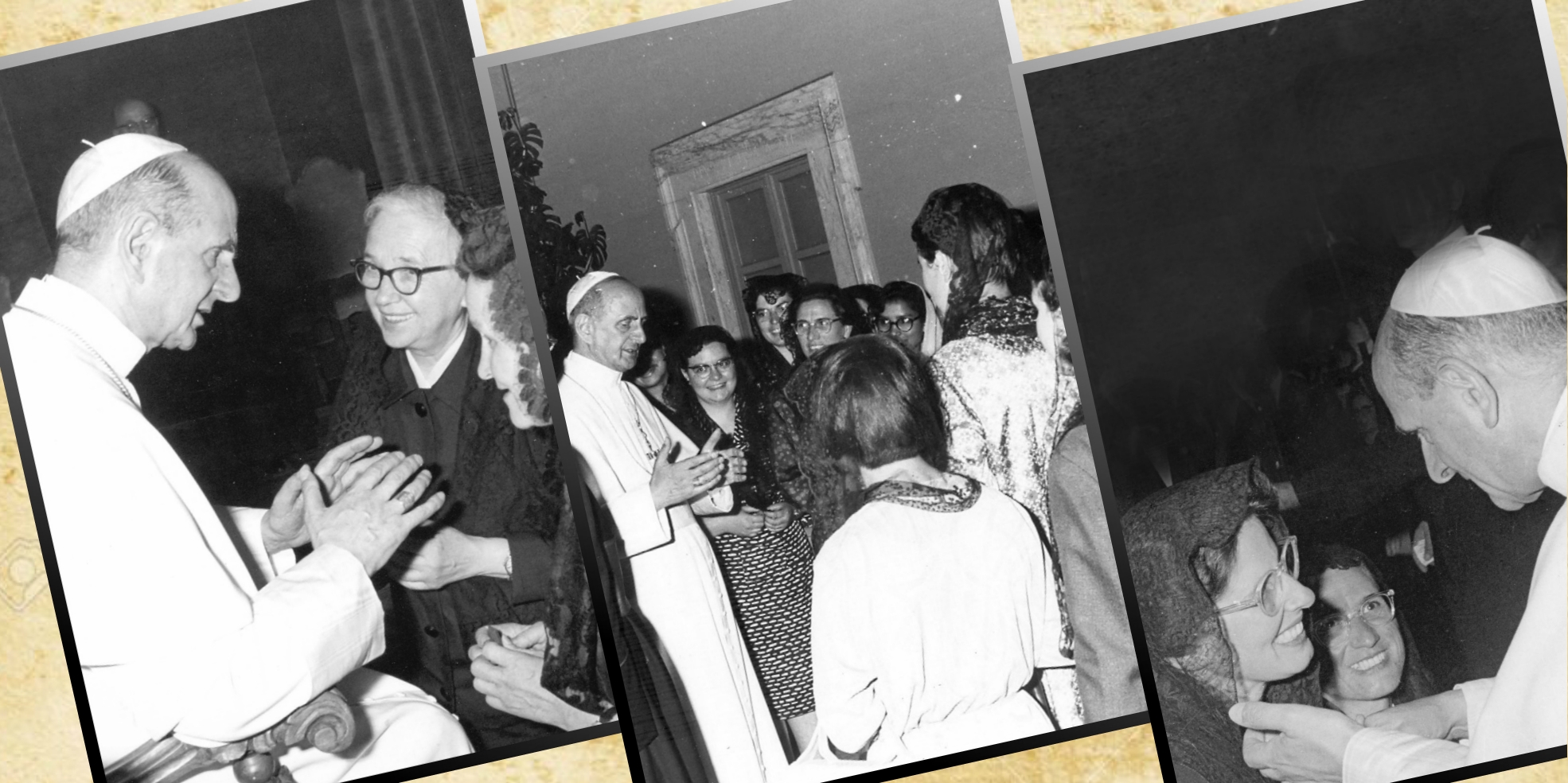
The canonization on October 14th of Paul VI, Mgr. Oscar Romero, Francesco Spinelli, Vincenzo Romano, Catherine Kasper, Nazaria Ignacia March Mesa, Nunzio Sulprizio manifests the multiform presence of Holy Spirit in a Church that acknowledges its sinfulness but is more than ever yet capable of generating holiness and sets off with renewed hope.
The figure of Paul VI, besides the richness of his personality and the complexity of historical context in which he had to work, particularly evokes in us School Missionaries fresh and live memories and we would like to share on this website the two speeches he addressed to us: one is a speech addressed to the young Missionaries in Castel Gandolfo on August 20, 1967 and the other, to the Missionaries in Rome on September 1st 1976, three months after the death of their Foundress Luigia Tincani. Mgr. Montini had shared with her, in the Italian Catholic University Federation (FUCI), a fruitful commitment of forming catholic professionals, during the difficult 1920's.
- Details
- Hits: 1508
I with my own experience know the pain of a mother when she loses her son, through the pain and agony of my mother when she lost her only beloved son. When I think about these events, I can’t help but sympathize with Mary as a mother. Her child has run off, and she doesn’t know where he is, for three days!
Of course, as any good mother would, Mary is freaking out. She wants to know why Jesus has put her through this. I can’t possibly understand the extent of her and Joseph’s terror: they have lost not only their child, but their Messiah! Can you imagine the worst case scenarios going through their heads? They’ve lost their Lord. Has he perished? Will they ever be able to find him again? Have they ruined God’s master plan and will He strike them dead in anger? They felt like this for three days.
There’s another time when Christ was lost for three days, his followers terror striken and alone. He was buried, leaving the disciples to wonder if God’s plan had been thwarted or if there was any hope left for anyone. Again, I can only imagine the despair they felt. Talk about the dark night of the soul!
Finding Our Lord in the temple after three days seems to me a clear foreshadowing of his resurrection. It is the unknown hope we are desperate for, and that God has planned all along. It is the dawn to end our dark night, which we never understood was possible. I think maybe everyone goes through dark times, feeling abandoned and alone and completely hopeless. Meditating on this mystery teaches me that God has a plan in our sufferings, that He is always in control, and that He will bring us out of the darkness in good time, whether we can see it or not.
Dear Lord, God almighty, let me remember with great joy the times I have found Jesus after I had gone astray.
Thank you for your great example of doing the will of your Father, so I in turn can follow your perfect example.
Grant me that in all my quests for knowledge and peace, I may never suffer the loss of Jesus, the only source of true peace. Amen
Of course, as any good mother would, Mary is freaking out. She wants to know why Jesus has put her through this. I can’t possibly understand the extent of her and Joseph’s terror: they have lost not only their child, but their Messiah! Can you imagine the worst case scenarios going through their heads? They’ve lost their Lord. Has he perished? Will they ever be able to find him again? Have they ruined God’s master plan and will He strike them dead in anger? They felt like this for three days.
There’s another time when Christ was lost for three days, his followers terror striken and alone. He was buried, leaving the disciples to wonder if God’s plan had been thwarted or if there was any hope left for anyone. Again, I can only imagine the despair they felt. Talk about the dark night of the soul!
Finding Our Lord in the temple after three days seems to me a clear foreshadowing of his resurrection. It is the unknown hope we are desperate for, and that God has planned all along. It is the dawn to end our dark night, which we never understood was possible. I think maybe everyone goes through dark times, feeling abandoned and alone and completely hopeless. Meditating on this mystery teaches me that God has a plan in our sufferings, that He is always in control, and that He will bring us out of the darkness in good time, whether we can see it or not.
Dear Lord, God almighty, let me remember with great joy the times I have found Jesus after I had gone astray.
Thank you for your great example of doing the will of your Father, so I in turn can follow your perfect example.
Grant me that in all my quests for knowledge and peace, I may never suffer the loss of Jesus, the only source of true peace. Amen
- Details
- Hits: 3481
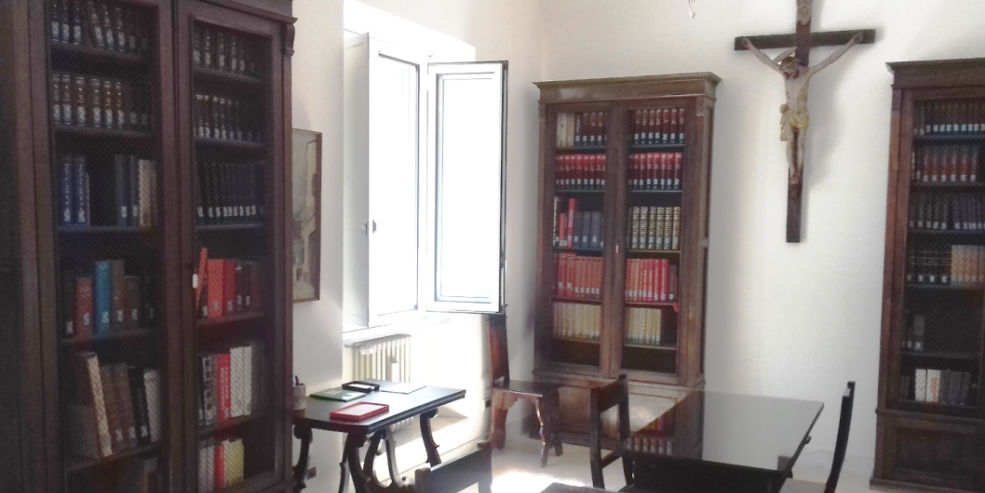
Luigia Tincani’s Library (via Appia Antica 226 - 00178 Roma) is open to the public. It takes part of the catalogue of “Polo Biblioteche Ecclesiastiche” (PBE).
General information (in italian)
Rules for readers
Catalogue
(submit your request and write PBEN6 in the box “CODICI”, before clicking on the button “SEARCH”)
General information (in italian)
Rules for readers
Catalogue
(submit your request and write PBEN6 in the box “CODICI”, before clicking on the button “SEARCH”)
- Details
- Hits: 2092
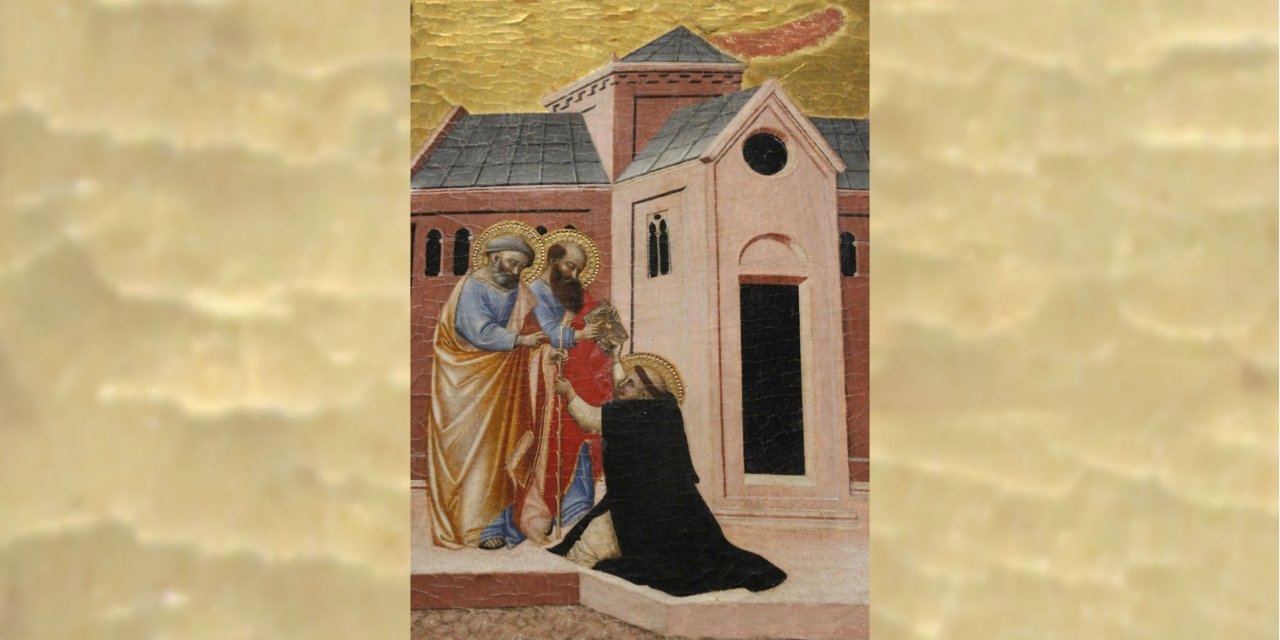
It is undeniable that the founder of the Order of Preachers had a great impact on the changes that have been done on what the Church looks like now. As a young Dominican sister I tried to study the story of our founder to understand in a better way the needs of the Church today.
First of all we need to look at which point the Church was at the time of Saint Dominic. By the 13th century Europe had entered a period of growth. Western parts were at the time of considerable peace. People felt safer, which caused the population growth and people started moving to cities. Unfortunately not everybody was lucky enough to find a better life there. Poverty among ordinary people was visibly spreading.
On the other hand there were people of the Church, especially heads of the Church, who definitely were not a good example of how to be a good Christian. Instead of sharing their wealth with the poor, they preferred to gather even more and spend money to make their lives even more comfortable than it had already been. Instead of looking at what people close to them needed and taking care of teaching them the Gospel, they were in favour of the Crusades to teach the people of the East the religion of peace using swords and leaving a bloody road behind.
No wonder that in those circumstances, where hierarchs were more occupied with what was happening outside Europe and how to have even more wealth, the Old Continent became a perfect place to develop heretic teachings. The Church was in an increasing crisis, mostly because of the things that were happening inside. A part of the Church, looking at what the priorities of the hierarchs were, started to oppose to it criticising strongly their way of living and developing new interpretations of Gospel. In that group two were the most important ones. First there were Catharists, which identified themselves with the idea of dualism in a very simplified manner and interpreted Gospel in a letteral way. Their influences were most visible in the southern part of France and Lombardy with the northern and central Italy. Another group was formed by Peter Waldo, after whom they got their name – Waldensians. Their vision at the beginning seemed to be positive, they saw corruption of the Church and by their preaching they wanted to show true living according to Gospel. They were also aware of the dangers from Catharists’ heretical teachings. Unfortunately they started to be more and more brave with accusing the hierarchies and they got suspended. This fact did not stop them as they became even more fierce in preaching, setting themselves outside the the Church.
Pope Innocent III seeing what was happening, how many ordinary people, as well as a part of clergy, were fascinated with heretics, started sending legates to prevent wrong teachings from spreading. But they could not do much. Both Waldensians and Catharists represented the same simple way of life, which was absolutely opposite to the one presented by the official Church and therefore they were always more convincing. Their austere and simple life was connected more with the teachings they gave than even the greatest preaching according to the Church, but done by a person, whose life was closer to a prince than to a person to whom he preached.
Dominic and his idea of preaching could not appear in a better moment. It was 1206 and he was travelling with Diego, the bishop of Osma, when on the way to Montpellier they met three Cistercians, who were papal legates, devastated after a failure with combating heresy, and one of the supporters of heretics. In both situations they did the same thing – spent whole night talking to them, discussing the problem and persuading to change their lives. Dominic’s ability to listen to others with respect mixed with his lively intelligence caused that they succeeded.
These events had surely an impact on founding the Order of Preachers. Dominic saw that laic people did not have anybody who would teach them Gospel of Christ properly. Some part of the clergy was also not formatted well enough to resist heresy, so his idea of preaching coincided with the need of the time, to protect Christian faith by forming people from the very bottom, starting with those, whose duty was to proclaim God’s word to common people. Faith was to be taught in both, heart of the Church, and in its edges, in all of the senses. Dominic became a living example of the grace of proclaiming the Word in a crucial moment in the Church’s history.
The Order of Preachers was founded just to serve the Church, and not only in one place, but all over the world. However, Dominic saw, that under the supervision of bishops in dioceses this service would be limited. That time priests of a particular Church were a part of a local Church and were dependant on a bishop, including canons and monks. Dominic was trying to have more freedom in helping the God’s word to spread. He asked the Holy See for receiving an exemption and he got even more. Pope gave Dominicans a privilege of celebrating a Holy Mass beyond sacred places, which means that they were the first order which was allowed to celebrate Eucharist wherever they were, without asking local authorities for permission. This definitely made it easier to go with the word of God to all people and be on service of the Church in even more accessible way.
It is indisputable that Holy Mass is crucial for every Christian, and so was for Dominic. It is said that he used to celebrate it with a great devoutness, just as he listened to confesses or was always available as a spiritual director for whoever asked him to be. All those aspects of priesthood were, according to him, the culmination or the basis of preaching and it was preaching that he wanted from his brethren to concentrate on as a part of a priest’s and monastic life. At the time, when preaching was not commonly connected with priestly functions, Dominic’s idea to mix them was a real novelty in the Church.
But the Church is not only a male domain. In 1207, in South France, in the beginning of his service Dominic saved a group of girls from the influence of heretics. They were mostly from noble but poor families whose parents had sent them to Catharists to give them proper education. To offer a new form of self development, which would be similar to a demanding and severe way of life represented by Catharists, Dominic, together with Diego of Osma, set a first Dominican monastery in Prouille. It was not a traditional female community as we know nowadays, but it constituted a double convent, where both, sisters and brothers, could create a real Dominican family. Those kinds of convents were not rare in the 13th century, but what was original, usually there were female communities that were joining male convents, which had been already set. In this case women had priority. The idea of their existence was not only to form themselves. By their contemplation and intercession they could take part in proclaiming the Word by brothers. What’s more, by the example of their life they were real samples of how to put this Word into practice.
As it is underlined nowadays, laic people are one of the biggest force that exist in the Church. 800 years ago it was not so obvious, but setting convents in cities by St. Dominic changed that point of view a little. Dominican preachers were closer to ordinary people, and because of that also laic people felt that living a religious life and proclaiming by giving the example of their own life, was not something reserved only for monks. But founding the first Third Order, which for a long time was attributed to Dominic, was yet to come. In Italy in the 13th century a group of people, who had converted, formed a penitentiary order (Ordo de Poenitentia s. Dominici), which was in the custody of Dominicans and whose role was to serve the truth in their proper way. This event was the beginning of the form which later transformed into the Third Order.
As we can see Dominic’s contribution to the Church is enormous. Together with his brothers they were pioneers in many branches that nowadays exist in the Church as normal. But what can we learn today from the work of Dominicans and saint Dominic himself? It seems, that the world is completely different than 800 years ago. But is it really? The best example we can find in the way dogmas of our faith are treated now. Because of the great law that we have, which is a freedom of speech and thought, as well as new inventions, such as the Internet and other things which make worldwide communication easier, anybody can spread information within a second, even a false one. Crisis in faith and in religious education, which we can observe especially in the Old Continent, facilitate wrong interpretations of the Bible and the basis on which our Church is built. Sensational information about some hierarchs and their not very Christian way of life do not make it easier either. No wonder that books, like The da Vinci Code are treated by some people like a new gospel and the Church is seen as a company, which wants to hide some uncomfortable truth. How can we react to this?
In this matter saint Dominic can be really helpful. When he met heretics and people who were influenced by their wrong teachings he did all he could to find what the biggest need of the person was, he listened and then talked to them trying to show the points, in which their way of thinking was illogical, not connected with the base – the Word of God. Then he could start building something new. What is the most important, he did it always with respect to others, looking at a person like a friend, who had done something wrong, but did not realize it, and with love, which had roots in communion with God in prayer and from the Gospel, which he always used to have with himself. When we look at the Dominic’s meetings with heretics we can see that he treated each person individually, spending hours on talking to them, but he had never stopped looking for other people who needed such talks. The Order of Preachers as a basic aim chose the motto of their founder: to preach Gospel to everyone, everywhere and with every possible mean, but preach with both its simplicity and profundity, remembering that without respect for a person, sharing of life, compassion for his or her spiritual poverty and concern about their salvation, proclaiming the Gospel is not possible, because “man is the primary route that the Church must travel in fulfilling her mission” (John Paul II, Enc. Redemptor Hominis, n. 14).
On the other hand there were people of the Church, especially heads of the Church, who definitely were not a good example of how to be a good Christian. Instead of sharing their wealth with the poor, they preferred to gather even more and spend money to make their lives even more comfortable than it had already been. Instead of looking at what people close to them needed and taking care of teaching them the Gospel, they were in favour of the Crusades to teach the people of the East the religion of peace using swords and leaving a bloody road behind.
No wonder that in those circumstances, where hierarchs were more occupied with what was happening outside Europe and how to have even more wealth, the Old Continent became a perfect place to develop heretic teachings. The Church was in an increasing crisis, mostly because of the things that were happening inside. A part of the Church, looking at what the priorities of the hierarchs were, started to oppose to it criticising strongly their way of living and developing new interpretations of Gospel. In that group two were the most important ones. First there were Catharists, which identified themselves with the idea of dualism in a very simplified manner and interpreted Gospel in a letteral way. Their influences were most visible in the southern part of France and Lombardy with the northern and central Italy. Another group was formed by Peter Waldo, after whom they got their name – Waldensians. Their vision at the beginning seemed to be positive, they saw corruption of the Church and by their preaching they wanted to show true living according to Gospel. They were also aware of the dangers from Catharists’ heretical teachings. Unfortunately they started to be more and more brave with accusing the hierarchies and they got suspended. This fact did not stop them as they became even more fierce in preaching, setting themselves outside the the Church.
Pope Innocent III seeing what was happening, how many ordinary people, as well as a part of clergy, were fascinated with heretics, started sending legates to prevent wrong teachings from spreading. But they could not do much. Both Waldensians and Catharists represented the same simple way of life, which was absolutely opposite to the one presented by the official Church and therefore they were always more convincing. Their austere and simple life was connected more with the teachings they gave than even the greatest preaching according to the Church, but done by a person, whose life was closer to a prince than to a person to whom he preached.
Dominic and his idea of preaching could not appear in a better moment. It was 1206 and he was travelling with Diego, the bishop of Osma, when on the way to Montpellier they met three Cistercians, who were papal legates, devastated after a failure with combating heresy, and one of the supporters of heretics. In both situations they did the same thing – spent whole night talking to them, discussing the problem and persuading to change their lives. Dominic’s ability to listen to others with respect mixed with his lively intelligence caused that they succeeded.
These events had surely an impact on founding the Order of Preachers. Dominic saw that laic people did not have anybody who would teach them Gospel of Christ properly. Some part of the clergy was also not formatted well enough to resist heresy, so his idea of preaching coincided with the need of the time, to protect Christian faith by forming people from the very bottom, starting with those, whose duty was to proclaim God’s word to common people. Faith was to be taught in both, heart of the Church, and in its edges, in all of the senses. Dominic became a living example of the grace of proclaiming the Word in a crucial moment in the Church’s history.
The Order of Preachers was founded just to serve the Church, and not only in one place, but all over the world. However, Dominic saw, that under the supervision of bishops in dioceses this service would be limited. That time priests of a particular Church were a part of a local Church and were dependant on a bishop, including canons and monks. Dominic was trying to have more freedom in helping the God’s word to spread. He asked the Holy See for receiving an exemption and he got even more. Pope gave Dominicans a privilege of celebrating a Holy Mass beyond sacred places, which means that they were the first order which was allowed to celebrate Eucharist wherever they were, without asking local authorities for permission. This definitely made it easier to go with the word of God to all people and be on service of the Church in even more accessible way.
It is indisputable that Holy Mass is crucial for every Christian, and so was for Dominic. It is said that he used to celebrate it with a great devoutness, just as he listened to confesses or was always available as a spiritual director for whoever asked him to be. All those aspects of priesthood were, according to him, the culmination or the basis of preaching and it was preaching that he wanted from his brethren to concentrate on as a part of a priest’s and monastic life. At the time, when preaching was not commonly connected with priestly functions, Dominic’s idea to mix them was a real novelty in the Church.
But the Church is not only a male domain. In 1207, in South France, in the beginning of his service Dominic saved a group of girls from the influence of heretics. They were mostly from noble but poor families whose parents had sent them to Catharists to give them proper education. To offer a new form of self development, which would be similar to a demanding and severe way of life represented by Catharists, Dominic, together with Diego of Osma, set a first Dominican monastery in Prouille. It was not a traditional female community as we know nowadays, but it constituted a double convent, where both, sisters and brothers, could create a real Dominican family. Those kinds of convents were not rare in the 13th century, but what was original, usually there were female communities that were joining male convents, which had been already set. In this case women had priority. The idea of their existence was not only to form themselves. By their contemplation and intercession they could take part in proclaiming the Word by brothers. What’s more, by the example of their life they were real samples of how to put this Word into practice.
As it is underlined nowadays, laic people are one of the biggest force that exist in the Church. 800 years ago it was not so obvious, but setting convents in cities by St. Dominic changed that point of view a little. Dominican preachers were closer to ordinary people, and because of that also laic people felt that living a religious life and proclaiming by giving the example of their own life, was not something reserved only for monks. But founding the first Third Order, which for a long time was attributed to Dominic, was yet to come. In Italy in the 13th century a group of people, who had converted, formed a penitentiary order (Ordo de Poenitentia s. Dominici), which was in the custody of Dominicans and whose role was to serve the truth in their proper way. This event was the beginning of the form which later transformed into the Third Order.
As we can see Dominic’s contribution to the Church is enormous. Together with his brothers they were pioneers in many branches that nowadays exist in the Church as normal. But what can we learn today from the work of Dominicans and saint Dominic himself? It seems, that the world is completely different than 800 years ago. But is it really? The best example we can find in the way dogmas of our faith are treated now. Because of the great law that we have, which is a freedom of speech and thought, as well as new inventions, such as the Internet and other things which make worldwide communication easier, anybody can spread information within a second, even a false one. Crisis in faith and in religious education, which we can observe especially in the Old Continent, facilitate wrong interpretations of the Bible and the basis on which our Church is built. Sensational information about some hierarchs and their not very Christian way of life do not make it easier either. No wonder that books, like The da Vinci Code are treated by some people like a new gospel and the Church is seen as a company, which wants to hide some uncomfortable truth. How can we react to this?
In this matter saint Dominic can be really helpful. When he met heretics and people who were influenced by their wrong teachings he did all he could to find what the biggest need of the person was, he listened and then talked to them trying to show the points, in which their way of thinking was illogical, not connected with the base – the Word of God. Then he could start building something new. What is the most important, he did it always with respect to others, looking at a person like a friend, who had done something wrong, but did not realize it, and with love, which had roots in communion with God in prayer and from the Gospel, which he always used to have with himself. When we look at the Dominic’s meetings with heretics we can see that he treated each person individually, spending hours on talking to them, but he had never stopped looking for other people who needed such talks. The Order of Preachers as a basic aim chose the motto of their founder: to preach Gospel to everyone, everywhere and with every possible mean, but preach with both its simplicity and profundity, remembering that without respect for a person, sharing of life, compassion for his or her spiritual poverty and concern about their salvation, proclaiming the Gospel is not possible, because “man is the primary route that the Church must travel in fulfilling her mission” (John Paul II, Enc. Redemptor Hominis, n. 14).