- Details
- Hits: 1820
In the pandemic, the time of Lent gives us again a great opportunity to ask questions about a person, about his/her identity as a human being. It’s the time of getting out of our zones of comfort and accommodating our plans. We are also continuously pushed to take human limitations and fragility into account which can be seen in all aspects of our lives. At the same time, we cannot stop and wrap ourselves up unable to see the critical events happening in and to our planet that we were given to be responsible for. In his message for Lent 2021 Pope Francis encourages us to “undertake it in the simplicity of heart to rediscover God’s gift and to recognize that, created in his image and likeness, we find our fulfilment in him” (No 1.). Is a person free or is he/she programmed by God? This is a question that we have been asking since ever.
The identity of a person, not only in this time of a global crisis but in all times, is understood as belonging to something that is common to all of us. We are all human beings, everyone can call him/herself a human. However, immediately comes another question – is it enough to remain a human being or do I have to become a human being?
The philosophers of the 20th century, after the Industrial Revolution, started to see a man as a being that is thrown into a natural order of the world, as something artificial. Some psychological thoughts underline that it is a positive moment when a person leaps from the natural evolution into an artificial evolution, chosen from various possibilities and programmed to arrive at a particular aim.
In the Enlightenment, humanism saw a person as somebody who can create his or her destiny. However, even if a person was not particularly delighted of being created by a Higher Creator, he/she saw in God the reason and aim to overcome their natural limitations. Biblical and Christian anthropology talk about the vocation of a man. He/she has an image of God inside themselves and is called to make it real in their lives “till we all come in the unity of the faith, and of the knowledge of the Son of God, unto a perfect man, unto the measure of the stature of the fulness of Christ” (Eph 4:13). “For it is God which worketh in you both to will and to do of his good pleasure” (Phil 2:13) because “for we are his workmanship, created in Christ Jesus unto good works, which God hath before ordained that we should walk in them” (Eph 2:10).
In the times of wars and pandemics at the turn of the Medieval and the Enlightenment Saint Catherine of Siena saw in human liberty a great opportunity. It gives a man the possibility "to become God, and God to become a person" (Dialogue, 15). However, she also sees it as a danger to a man that can separate him/herself from the project given by God to follow his/her narcissistic ideas that enable him/her "to make a god of him/herself" (Dialogue, 33). The same idea can be found in the book of Harari, Homo Deus (2015). The author claims that we, people of the 21st century, live in the world virtually free from pandemics, in prosperity and peace, and we use more and more powerful tools to realize ancient ambitions to lift humanity in the level of gods, to leap Homo Sapiens into Homo Deus.
Nowadays we can see more and more discrepancy between technological possibilities and global dangers, that influence all societies. Modern science gives us the tools not only to diagnose the causes and evaluate the risks but also to plan and implicate new solutions. Particular interests, though, too often obscure the idea to work for the common good. The Pope underlines the urge to stay in guard as “it is easy to fall prey to an unbalanced and arrogant anthropocentrism”, and “the “I” at the centre of everything, which overinflates our role as human beings, positioning us as absolute rulers of all other creatures” is auto-destructive (General Audience, 16.09.2020).
It was already the Vatican Council II that made it clear where should be the role of a human being in front of the unbalanced progress: “the modern world shows itself at once powerful and weak, capable of the noblest deeds or the foulest; before it lies the path to freedom or to slavery, to progress or retreat, to brotherhood or hatred. Moreover, man is becoming aware that it is his responsibility to guide aright the forces which he has unleashed and which can enslave him or minister to him” (Gaudium et Spes, No. 9).
We need to raise awareness about this responsibility. It is an urgent and demanding thing. Even these days, where it seems that hope is only a mere emotional consolation, Christian anthropology can offer non only the illusory point of view. In the book of Genesis (1, 26) a man receives work to do – he has to take care of the world. God has His plan and He invites a man to fulfil it. He knows us, He knows our destination and sees it from a longer perspective. We are called “to be conformed to the image of his Son, that he might be the firstborn among many brethren” (Rom 8:29). “In whom also we have obtained an inheritance, being predestinated according to the purpose of him who worketh all things after the counsel of his own will: that we should be to the praise of his glory” (Eph 1:11-12).
The idea of destiny seems to be in the opposition to the ontological view of a human being. A person is not determined, and as such can fulfil his/her liberty. The texts of Saint Paul, at least in the Greek version, consider destiny as an aim that is proposed by the Creator to His free creature. It gives the right direction that helps a man to follow the path to fulfil who he/she really is. Lent, which brings us closer to the mystery of Easter can be seen as a metaphor for the life of each human being. Christ that raised shows us the archetype of a human. We can see Him in the faces of people that we meet every day, not only Christians. He is the example of who we should become. It remains as a work to do, that is left to our liberty.
The identity of a person, not only in this time of a global crisis but in all times, is understood as belonging to something that is common to all of us. We are all human beings, everyone can call him/herself a human. However, immediately comes another question – is it enough to remain a human being or do I have to become a human being?
The philosophers of the 20th century, after the Industrial Revolution, started to see a man as a being that is thrown into a natural order of the world, as something artificial. Some psychological thoughts underline that it is a positive moment when a person leaps from the natural evolution into an artificial evolution, chosen from various possibilities and programmed to arrive at a particular aim.
In the Enlightenment, humanism saw a person as somebody who can create his or her destiny. However, even if a person was not particularly delighted of being created by a Higher Creator, he/she saw in God the reason and aim to overcome their natural limitations. Biblical and Christian anthropology talk about the vocation of a man. He/she has an image of God inside themselves and is called to make it real in their lives “till we all come in the unity of the faith, and of the knowledge of the Son of God, unto a perfect man, unto the measure of the stature of the fulness of Christ” (Eph 4:13). “For it is God which worketh in you both to will and to do of his good pleasure” (Phil 2:13) because “for we are his workmanship, created in Christ Jesus unto good works, which God hath before ordained that we should walk in them” (Eph 2:10).
In the times of wars and pandemics at the turn of the Medieval and the Enlightenment Saint Catherine of Siena saw in human liberty a great opportunity. It gives a man the possibility "to become God, and God to become a person" (Dialogue, 15). However, she also sees it as a danger to a man that can separate him/herself from the project given by God to follow his/her narcissistic ideas that enable him/her "to make a god of him/herself" (Dialogue, 33). The same idea can be found in the book of Harari, Homo Deus (2015). The author claims that we, people of the 21st century, live in the world virtually free from pandemics, in prosperity and peace, and we use more and more powerful tools to realize ancient ambitions to lift humanity in the level of gods, to leap Homo Sapiens into Homo Deus.
Nowadays we can see more and more discrepancy between technological possibilities and global dangers, that influence all societies. Modern science gives us the tools not only to diagnose the causes and evaluate the risks but also to plan and implicate new solutions. Particular interests, though, too often obscure the idea to work for the common good. The Pope underlines the urge to stay in guard as “it is easy to fall prey to an unbalanced and arrogant anthropocentrism”, and “the “I” at the centre of everything, which overinflates our role as human beings, positioning us as absolute rulers of all other creatures” is auto-destructive (General Audience, 16.09.2020).
It was already the Vatican Council II that made it clear where should be the role of a human being in front of the unbalanced progress: “the modern world shows itself at once powerful and weak, capable of the noblest deeds or the foulest; before it lies the path to freedom or to slavery, to progress or retreat, to brotherhood or hatred. Moreover, man is becoming aware that it is his responsibility to guide aright the forces which he has unleashed and which can enslave him or minister to him” (Gaudium et Spes, No. 9).
We need to raise awareness about this responsibility. It is an urgent and demanding thing. Even these days, where it seems that hope is only a mere emotional consolation, Christian anthropology can offer non only the illusory point of view. In the book of Genesis (1, 26) a man receives work to do – he has to take care of the world. God has His plan and He invites a man to fulfil it. He knows us, He knows our destination and sees it from a longer perspective. We are called “to be conformed to the image of his Son, that he might be the firstborn among many brethren” (Rom 8:29). “In whom also we have obtained an inheritance, being predestinated according to the purpose of him who worketh all things after the counsel of his own will: that we should be to the praise of his glory” (Eph 1:11-12).
The idea of destiny seems to be in the opposition to the ontological view of a human being. A person is not determined, and as such can fulfil his/her liberty. The texts of Saint Paul, at least in the Greek version, consider destiny as an aim that is proposed by the Creator to His free creature. It gives the right direction that helps a man to follow the path to fulfil who he/she really is. Lent, which brings us closer to the mystery of Easter can be seen as a metaphor for the life of each human being. Christ that raised shows us the archetype of a human. We can see Him in the faces of people that we meet every day, not only Christians. He is the example of who we should become. It remains as a work to do, that is left to our liberty.
- Details
- Hits: 1592
"Peace on earth to men, loved by the Lord!": The Gloria of the third edition of the Missal introduced in the liturgy, the new translation of Lk 2:14, which overcomes, even in Italian, the traditional misunderstanding resulting from the erroneous interpretation of the text in Latin: translating materially it had highlighted the "good will" of those who welcome the mystery of Christmas, while the original Greek text of the Gospel speaks of the "beautiful plan" that God has for human beings, and this project is the Incarnation of the Son: a free divine initiative, springing from the Trinitarian life. The angels announce it on the night of Bethlehem, expanding to universal announcement what was beginning as an announcement brought to a group of shepherds. And they did not stay there to look at the sky, where the multitude of angels had disappeared, but they said to each other, sensibly: "Let us therefore go to Bethlehem and see this event which the Lord has made known to us" (Lk 2:15). What they found was precisely the sign announced by the angel: a newborn lying in a manger. Tradition has then added the ox and the donkey to Mary and Joseph, suggested by biblical references, of course, but also by a healthy popular realism, given that the Gospel account speaks of a manger.
Those shepherds and that manger certainly did not smell of bubble bath, but - paradoxically - the sign is right there in the middle, it is that Child who has no other word to say, on Christmas night.
Centuries of artistic masterpieces on the mystery of the Nativity should not make us lose sight of the stupendous concreteness of the sign offered by God to humanity, loved by him as it is, without aesthetic adjustments. God became incarnate in a human context made of light and earth: the love of Mary and Joseph but also the smells of a stable ... Luigia Tincani's Christmas wish did not forget this: Jesus "appeared on the straw, accepted the needs and trials of nature, he came and dwelt among sinners ": this year many events (including the experiences lived by those who are healed of the covid) make us reflect on the frailty of the human being and the difficulties of earthly existence: and the Son of God wanted to assume all this, to the end, to transfigure it.
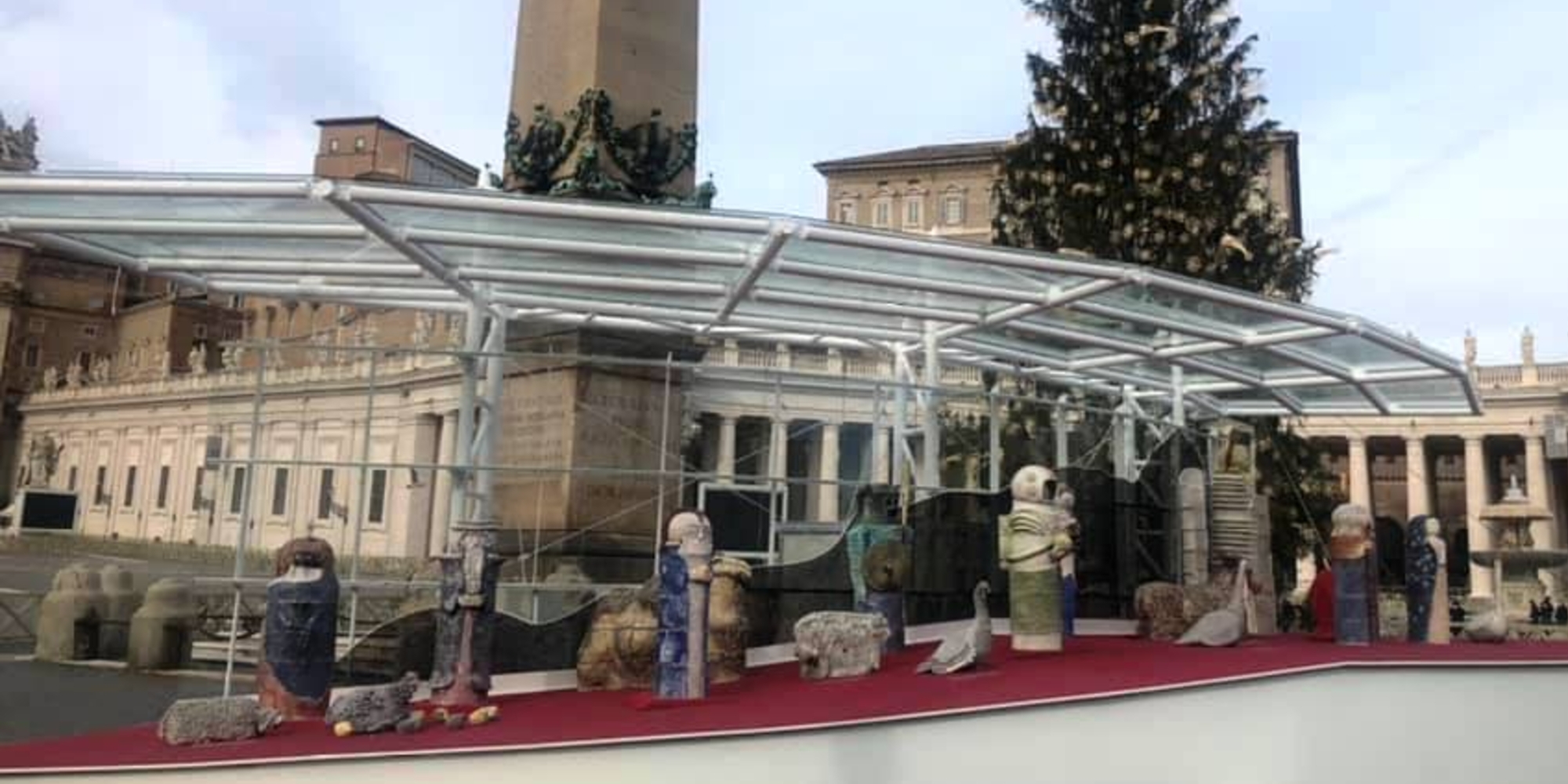
All this comes to mind while reading the scandalized messages that bounce on social media about the nativity scene installed this year in St. Peter's Square: can’t it be an opportunity to rediscover the theological reality of Christmas, welcoming the "beautiful project" of God on each of us, without the need for any make-up?
The choice is ours. Merry Christmas!
Those shepherds and that manger certainly did not smell of bubble bath, but - paradoxically - the sign is right there in the middle, it is that Child who has no other word to say, on Christmas night.
Centuries of artistic masterpieces on the mystery of the Nativity should not make us lose sight of the stupendous concreteness of the sign offered by God to humanity, loved by him as it is, without aesthetic adjustments. God became incarnate in a human context made of light and earth: the love of Mary and Joseph but also the smells of a stable ... Luigia Tincani's Christmas wish did not forget this: Jesus "appeared on the straw, accepted the needs and trials of nature, he came and dwelt among sinners ": this year many events (including the experiences lived by those who are healed of the covid) make us reflect on the frailty of the human being and the difficulties of earthly existence: and the Son of God wanted to assume all this, to the end, to transfigure it.
All this comes to mind while reading the scandalized messages that bounce on social media about the nativity scene installed this year in St. Peter's Square: can’t it be an opportunity to rediscover the theological reality of Christmas, welcoming the "beautiful project" of God on each of us, without the need for any make-up?
The choice is ours. Merry Christmas!
- Details
- Hits: 1224
It is time of repentance and regret, to reconcile ourselves from sin and turn back to God, to forgive and to be forgiven. This virus is a sign to build healthy relations with God. It is a great occasion to be merciful towards all the living creature, as St. Luke states in 6:36. “Be merciful as your heavenly Father is merciful”.
Considering the current situation of the world, Corona virus prevailed also in Pakistan. Everybody is suffering but especially those who are affected by it and died with this epidemic. Many young doctors, nuns and priests took the risk to serve the humanity in this dangerous time and offered their precious lives to God while saving the other souls. It is a great loss for the Church and also for the government.
Due to corona virus we are locked down at home. Many zones of Pakistan like Karachi, Islamabad, Lahore, Faisalabad and Multan are sealed.
I am a member of Multan community. In the present situation if we see the education level of students we are going behind, because Schools are closed and even we are not allowed to call our teachers. While staying at home we are doing our best. For example, each teacher has made the group of students of each class, we are sending them the homework by WhatsApp, and some teachers are doing their lessons on Google Meet and on Zoom. For those students who have no possibility of internet, we prepare the notes and leave in the office, so one by one they come with their parents and take their notes. In this way we are trying to involve the students in education using the modern technology in a better way and we are also keeping in touch with their parents. Sometimes parents share their miserable experience of life, financially they are very poor and don’t pay the fee. They are hopeless but we encourage them and guide them to have trust in God, He is the One who can solve our problems. We assure them that we are praying for them.
We are involving our domestic staff in different activities. Any appeal which we receive from the Holy Father, we share with them. For example, in the month of May, He appealed to keep fast and to pray for the ending of corona virus, so our helpers too followed us. We and our helpers recited Our Father on 25 March at 12:00 am according to His request. At night 9:30pm we followed the adoration and recited the Holy Rosary with the Holy Father through multimedia. At 5:30pm we had one hour of adoration in which we showed different symbols of the universe as mentioned in Laudato Sii. We read the different passages from this document and recited special Rosary for all the intentions of the Holy Father. We inspire them to pray with their families and we do the same in our community.
In the month of May, we recited the Rosary in front of the grotto of Mother Mary. Outsiders also participate and on 31 of May, on the feast of the visit of Mary to St. Elizabeth they bring their offering in the form of food, money and veils and offer to Mother Mary. This time also we recited the Rosary with people, but they came to pray not in the form of big crowd due to corona virus but one by one or two by two, according to their time they came and prayed because they have great devotion to Mother Mary. After the Rosary we prayed to our Lady (prayer to the virgin Mary for protection during Covid.19 Coronavirus pandemic) which the Holy father implored to pray, we distributed the prayer to the people so that at home they may pray to our Lady.In the community we are praying more and more from the day when this virus started. We initiated one hour of adoration every day, for the ending of corona virus and recite the Rosary of mercy asking the mercy of God towards people.
Sr. Martha proposed that even during lockdown we must find ways to be in touch with our people through different means of apostolate in order to be their support and consolation and nourish their faith to be authentic and strong Christians and be faithful to the Lord till our last breath. Mother’s sayings will be taken and prepare MMS and send to the delegate every Friday after 1st June. She will then put on our page on face book titled: ‘DOMINICAN SCHOOL MISSIONARIES Pakistan’. This must be the result of our study of mothers writing or the writing of our mentors like sisters Anna Maria Balducci, EddaDucci, GiulianaCavallini etc.
As we know the circumstances are very tough so one positive thing, we can take from it: It gave us the possibility to build our relations with God, to practice the different virtues of patience, humility and silence and to increase our faith in God. It encourages us to bear all the sufferings for the glory of God as Jesus suffered for our salvation.
It is a golden chance for the families to spend time together specially for those who are busy in their professional lives. It can be our wonderful experience to renew our life by accepting the will of God through passing this difficult time.
Monica
- Details
- Hits: 1378
Closing schools because of the pandemic has led us to new experiences and has faced us with various challenges. It was hard, especially at the beginning, for both the teachers and the students and their parents. We adjusted ourselves, we got away with it. The school year is over. What is left of it? Among the various sensations I would like to share one.
I remember how a talented colleague "complained" to some of her alumni who did not show up once they finished school: How is it possible that these good boys and girls with whom I have discussed at length and in depth about various problems, I have shared ideas and doubts, I laughed and cried, after school they leave and they don't make themselves heard again? But do they realize that they have not been among the many, but that each one is unique to me, to each I have given the best of myself: the awareness of what I teach, the attention, the time, the love, the experience, the nights of research to give some extra impulse, to wake up something in their mind and heart?
"Now that we have already reached the end and the final marks have been awarded, I am also amazed and sorry for the behavior of the children who did not show up in the distance teaching period. I did everything I could and even beyond. In the beginning I thought that they did not have a computer at home or enough data to follow all the lessons. Then, assured by the class tutors that each of the boys could be contacted, I justified them for the increase in the commitment required of them in the present moment. But is it possible that a boy does not look for a contact when he does not receive lessons from one or the other subject, or that he says he does not receive the material to study while instead he uses the opportunity to choose to do only the minimum necessary to be promoted? There is no desire to communicate ! You can have ten mobile phones and as many computers in the house but if you do not want to communicate, they are useless. "
I remember the excitement of when as a girl I discovered that "the teacher is a human being too". He is not someone who stands against me, but someone like me with whom I can talk not only about the subject he teaches.
The forced social isolation from the pandemic certainly did not help us, it was hard not only for our students, but also for the teachers. We miss the others, the contact with the living and true person, not closed behind the screen of the computer or mobile phone. But what do our kids feel and understand? Are they able to imagine that the teacher misses them?
Will we learn anything from this experience? The teachers forcefully and quickly educated themselves on new technologies and social media. What about the students? In my opinion, those who know how to organize their time and are disciplined will be able to draw advantage from this period: two important but uncommon abilities that perhaps cannot be transmitted or taught but must be desired. Certainly those of my pupils who did not show up for all three months of distance learning did not have these skills.
I believe that the fault was not on the side of technologies (the old or new computer, the fast or slow internet) but it is the man who needs to know and govern himself in the newness of the changing world: every student must find out that he is a human being whether he has the internet or not, who uses the cellphone or not. You are in a relationship with, therefore seek contact at all costs, think not only of yourself, but of the other, of others. Come on, ask. Don't wait for things to go freewheel, keep your hands behind the wheel of your life.
A bit of surprise and bitterness transpires in my reflections, but honestly I must say that there were also rays of sun and hope in this whole experience. But maybe I'll talk about this another time ...
Agnieszka
I remember how a talented colleague "complained" to some of her alumni who did not show up once they finished school: How is it possible that these good boys and girls with whom I have discussed at length and in depth about various problems, I have shared ideas and doubts, I laughed and cried, after school they leave and they don't make themselves heard again? But do they realize that they have not been among the many, but that each one is unique to me, to each I have given the best of myself: the awareness of what I teach, the attention, the time, the love, the experience, the nights of research to give some extra impulse, to wake up something in their mind and heart?
"Now that we have already reached the end and the final marks have been awarded, I am also amazed and sorry for the behavior of the children who did not show up in the distance teaching period. I did everything I could and even beyond. In the beginning I thought that they did not have a computer at home or enough data to follow all the lessons. Then, assured by the class tutors that each of the boys could be contacted, I justified them for the increase in the commitment required of them in the present moment. But is it possible that a boy does not look for a contact when he does not receive lessons from one or the other subject, or that he says he does not receive the material to study while instead he uses the opportunity to choose to do only the minimum necessary to be promoted? There is no desire to communicate ! You can have ten mobile phones and as many computers in the house but if you do not want to communicate, they are useless. "
I remember the excitement of when as a girl I discovered that "the teacher is a human being too". He is not someone who stands against me, but someone like me with whom I can talk not only about the subject he teaches.
The forced social isolation from the pandemic certainly did not help us, it was hard not only for our students, but also for the teachers. We miss the others, the contact with the living and true person, not closed behind the screen of the computer or mobile phone. But what do our kids feel and understand? Are they able to imagine that the teacher misses them?
Will we learn anything from this experience? The teachers forcefully and quickly educated themselves on new technologies and social media. What about the students? In my opinion, those who know how to organize their time and are disciplined will be able to draw advantage from this period: two important but uncommon abilities that perhaps cannot be transmitted or taught but must be desired. Certainly those of my pupils who did not show up for all three months of distance learning did not have these skills.
I believe that the fault was not on the side of technologies (the old or new computer, the fast or slow internet) but it is the man who needs to know and govern himself in the newness of the changing world: every student must find out that he is a human being whether he has the internet or not, who uses the cellphone or not. You are in a relationship with, therefore seek contact at all costs, think not only of yourself, but of the other, of others. Come on, ask. Don't wait for things to go freewheel, keep your hands behind the wheel of your life.
A bit of surprise and bitterness transpires in my reflections, but honestly I must say that there were also rays of sun and hope in this whole experience. But maybe I'll talk about this another time ...
Agnieszka
- Details
- Hits: 1332
A virus, Covid 19, on the afternoon of March 5, while the usual Class Council was taking place, decided to close the schools managing to impose its "law" there, where even two world wars could not.
Distance Learning has thus become the novelty that has filled the "forced" daily life in the houses, both for students and teachers. The difficulties were different and varied. The technological ones, the first to manifest themselves, were also the first to be resolved, thanks to the massive intervention of the school which distributed tablets and sim cards to all the children who needed them. Another difficulty was the resistance, on the part of some students, to having to turn on the video camera to be seen by teachers and classmates. There was little talk about this difficulty and, when we did, we limited ourselves to judging the children as unruly. Certainly someone has been unruly, but not all of them, because behind that lingering there was something precious: the safeguarding of a truth that out of modesty and respect for loved ones did not want to reveal.
We did not realize that we entered, without asking permission, into the homes and rooms (for those who have them) of these young people, violating their most hidden and personal world, part of their secrets, that which among the benches often don't come out. So some of us have known, sharing them even with laughter, the most hidden passions, through the posters on the walls of their room; but of others we discovered with pain and amazement their poverty, the daily difficulties they face with their large family, to live and study in a few square meters. We don't know how much it cost these guys to turn on the video camera, but we know we had in front of us, many little "giants" who, despite their young age, knew how to live with dignity without ever complaining, without taking advantage of their precarious condition, surprising us with the great lesson of humility which this time we have been given.
Through daily connections with the students of the various classes, teaching continued its course, the contents were transmitted and deepened, often even with the help of multiple technological systems, multiplying the commitment and work that did not have timetable anymore.
In this way, a new way of teaching and a new way of learning were experimented, which we cannot however define as "school".
This short word does not only contain well-organized and structured teaching, but much more. It is above all a place where, since childhood, most of the day is spent, becoming a second home for everyone. The only place that will never be forgotten because only there one lived among companions, as well as between students and teachers, that mysterious exchange of emotions, of complicity, of moods, of looks that read and speak, of smiles and, above all, of mutual growth.
The performance of the high school exams in attendance did nothing but confirm all this. Despite the due precautions that forced us to wear the mask for many hours (even 11!), the distance between us teachers and the students' accommodation in an even more distant desk and behind a Plexiglas screen, the emotion of returning to classroom was really strong for everyone.
Being able to look into the eyes again, accompany each student on the short journey from the "waiting" room to the exam room, encouraging him with the words that only his teacher knows to be the "right" ones for him, transmitting to him that safety and serenity that before an exam is sought in the one you trust, to offer a handkerchief to dry and share the tears of joy of these students for having successfully finished the exams, but also of melancholy for an important chapter of one's life that ends, ready to face a new and completely unknown one. It was the confirmation that the school is not only the transmission of notions, but above all the human relationship, the exchange of emotions ... walking together teacher and student, that no virtual reality will ever be able to replace!
Gina
Distance Learning has thus become the novelty that has filled the "forced" daily life in the houses, both for students and teachers. The difficulties were different and varied. The technological ones, the first to manifest themselves, were also the first to be resolved, thanks to the massive intervention of the school which distributed tablets and sim cards to all the children who needed them. Another difficulty was the resistance, on the part of some students, to having to turn on the video camera to be seen by teachers and classmates. There was little talk about this difficulty and, when we did, we limited ourselves to judging the children as unruly. Certainly someone has been unruly, but not all of them, because behind that lingering there was something precious: the safeguarding of a truth that out of modesty and respect for loved ones did not want to reveal.
We did not realize that we entered, without asking permission, into the homes and rooms (for those who have them) of these young people, violating their most hidden and personal world, part of their secrets, that which among the benches often don't come out. So some of us have known, sharing them even with laughter, the most hidden passions, through the posters on the walls of their room; but of others we discovered with pain and amazement their poverty, the daily difficulties they face with their large family, to live and study in a few square meters. We don't know how much it cost these guys to turn on the video camera, but we know we had in front of us, many little "giants" who, despite their young age, knew how to live with dignity without ever complaining, without taking advantage of their precarious condition, surprising us with the great lesson of humility which this time we have been given.
Through daily connections with the students of the various classes, teaching continued its course, the contents were transmitted and deepened, often even with the help of multiple technological systems, multiplying the commitment and work that did not have timetable anymore.
In this way, a new way of teaching and a new way of learning were experimented, which we cannot however define as "school".
This short word does not only contain well-organized and structured teaching, but much more. It is above all a place where, since childhood, most of the day is spent, becoming a second home for everyone. The only place that will never be forgotten because only there one lived among companions, as well as between students and teachers, that mysterious exchange of emotions, of complicity, of moods, of looks that read and speak, of smiles and, above all, of mutual growth.
The performance of the high school exams in attendance did nothing but confirm all this. Despite the due precautions that forced us to wear the mask for many hours (even 11!), the distance between us teachers and the students' accommodation in an even more distant desk and behind a Plexiglas screen, the emotion of returning to classroom was really strong for everyone.
Being able to look into the eyes again, accompany each student on the short journey from the "waiting" room to the exam room, encouraging him with the words that only his teacher knows to be the "right" ones for him, transmitting to him that safety and serenity that before an exam is sought in the one you trust, to offer a handkerchief to dry and share the tears of joy of these students for having successfully finished the exams, but also of melancholy for an important chapter of one's life that ends, ready to face a new and completely unknown one. It was the confirmation that the school is not only the transmission of notions, but above all the human relationship, the exchange of emotions ... walking together teacher and student, that no virtual reality will ever be able to replace!
Gina
- Details
- Hits: 1098
The awaken city Mumbai, is one of the largest Metropolitan cities of India where most of the people are migrants, who have come in search of employment. The life of this city came to a standstill in mid-march 2020 due to coronavirus. The early alert by the government officers, helped to be more vigilant, in order to stay safe and follow the social distance.
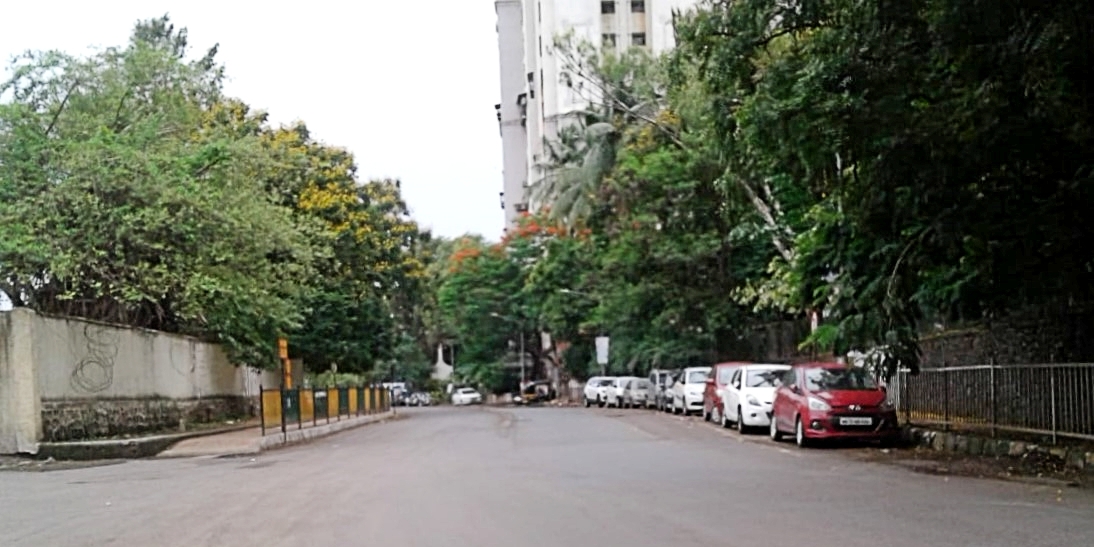
The dense populated area experienced a dead silence…..Industries which functioned 24x7 stopped all kinds of work; metros, airways and buses which helped the people to reach to their destination remained motionless on the ground. Parks, malls, city centers and cinema theaters that entertained us remained closed. Everywhere silence and everybody in a state of fear, anxiety, helplessness and restlessness in an imposed silence and rest!!!
Nevertheless, this unprecedented state of life caused by the rapid spread of virus and the consequent lock down, has a bright side too in so many aspects. The human beings fully engrossed in materialistic and consumeristic world with the pretence of a lordship over everything, began to recognize gradually their inadequacies, incapacities and helplessness and thus lifted their eyes above to "from where shall come the help" to the Divine, to the One powerful turning to Him in trust for help in the moment desolation. How true the affirmation: "our hearts are restless until they find rest in Him"! So, this moment of desolation triggered the dormant spiritual life in everyone. When places of worship were closed down, the families tuned into temples where God is pleased to dwell. Catholic families became small domestic churches with a spirit of prayer and devotion.
Young parents with busy schedule who have had no time to spend with children and the aged parents now constrained to be indoors, began to experience the warmth of family life, of togetherness, evoking family spirit, unity, mutual concern and collaboration, thus rediscovering the beauty and sanctity of family life.
So, in a way this lockdown period helped everyone to recognize his/ her creatureliness before a powerful Creator!
This Pandemic caused hit badly the common man, the daily wage earners and the migrants who suffered lacking the bare necessities of life.
As the saying goes "when one door is closed, God will open another" & "Every dark cloud has a silver lining", the Catholic Church in Mumbai under the leadership of Cardinal rose up to the moment to meet the challenges of life. Many volunteers, good Samaritans came forward extending their generous service and help.
* Parish doors were opened to distribute the basic necessities of life.
* Many NGO`s opened their arms to cater the needs of the poor.
* Famous film actors extended their cooperation to our migrants to reach out their destination safe and sound.
* Schools and colleges which were shut down due to the pandemic, welcomed the homeless migrants offering them shelter.
* The abrupt end of normal schooling created a lot of chaos among the students and parents. In order to help the children, teachers made use of the technology to keep them busy with academic programme.
How could this happen in the midst of all dangerous situation? The answer is,… the divine voice echoed in the ears of all these good people “I was hungry, you gave me food, I was thirsty, you gave me to drink, I was homeless, you gave me shelter…” Though we do not have Mother Theresa of Calcutta, we could see many MOTHER THERESA`S who came forward willingly to offer their services and reach out to the people specially to the poorest of the poor. Hat`s of to all these people. May God bless them abundantly and give them good health of mind and body to do more service to the needy humanity.
Helen
Helen