- Details
- Hits: 1267
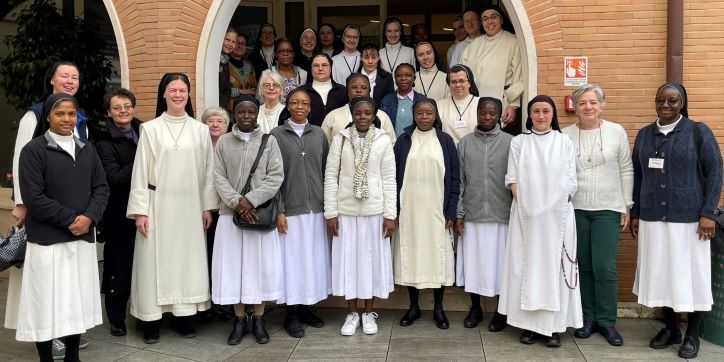
From 24 to 26 February 2023, an annual European meeting of young Dominican Sisters of Apostolic Life was held in Rome: YSOP2023 ("Young Sisters OP, edition 2023") on the theme "Community, the search for truth and freedom". The conference, organised by the DSE i.e. the European section of the Dominican Sisters International Confederation - DSIC, was attended by more than forty sisters from various parts of Europe. Here is the testimony of a participant from the Union:
I went there with the desire to meet new people and to experience something that would help me improve my being a Dominican religious. All I knew was that there were 43 people from 13 countries, and simultaneous translation of the lectures and work in the groups according to the declared languages. Everything else was to be discovered.
My first impression was the discovery of the spiritual radiance of so many women religious present, filled with the beauty that peace and joy of spirit add to youth, followed by the wonder of multiculturalism combined with unity in Christ and St Dominic. The height of diversity and unity was perhaps reached during Vespers, recited and sung in seven (yes, 7!) languages, one after the other. But the unity was manifested especially with the singing in Latin of the typically Dominican antiphons: the Salve Regina and O lumen Ecclesiae to St Dominic.
In short, during these two days we explored various topics related to community life, in particular the beauty of being together and of forming a community that lives the same charism (which is something different from simply living together); but we also spoke of the riches and difficulties inherent in community relationships, and of ways of living interpersonal conflicts, those that are useful in resolving problems and those that are dysfunctional; important was the discussion on the challenges of preaching in today's world. The second topic, very much felt, concerned collaboration between the various Dominican women's congregations, the collaboration that already exists and that which we dream of. We tried to make concrete proposals based on the needs we discover and the resources we have to walk together, that is, what can be done and who could do it.
Finally, on Sunday 26 February, after participating in Holy Mass and a guided tour of the Basilica of St. Sabina and the cell of St. Dominic, we had the joy of meeting Brother Gerard Francisco Timoner, Master General of the Order, who confirmed us even more, if we needed it, in the joy of the Dominican vocation.
My experience at YSOP2023 could be summarised in three points:
1. What wonderful people I met, what intense but beautiful days I experienced! It is not that I understood everything that was said, especially in the small groups. But the most important thing is that together we tried to listen to each other and understand each other, that despite so many differences we discovered we were close: sisters whom God has called to follow Christ and St Dominic, sisters who can get to know each other, appreciate each other and work together for God and His Church.
2. Of the things that were said, first of all what was said by the Master General in the cell of St Dominic remained in my mind: "In the morning I heard an elderly provincial speak and he said: How sad, we are few, we have to close this one and that one, etc... Instead in the afternoon two young provincials spoke and said: Let's do that, let's do this. It doesn't matter if we are few, it's the quality that counts". In conclusion, we must be what we are and try to do - whether we are few or many – what we can.
3. I think meetings like this are really important, at least once in a lifetime. I would especially propose them to those who have lived only in their home country. Why? Because I think they can give a deeper breath to religious life: we - my congregation, the Church in my country - are not the whole Church! Of course, to experience an international conference fruitfully, one needs to be somewhat prepared, but not much is needed: knowledge of one of the foreign languages (English is best), and first of all the good will to meet the OTHER and learn something.
A big thank you to those who worked on the preparation of the conference, in particular to Sister Pilar del Barrio ("the person in charge"), Sister Teresa Hieslmayer from Austria (the first speaker) and Sister Ino Rincón from Spain (the second speaker), but also to all those who worked behind the scenes and to the Superior General who gave me the opportunity to participate.
- Details
- Hits: 1123
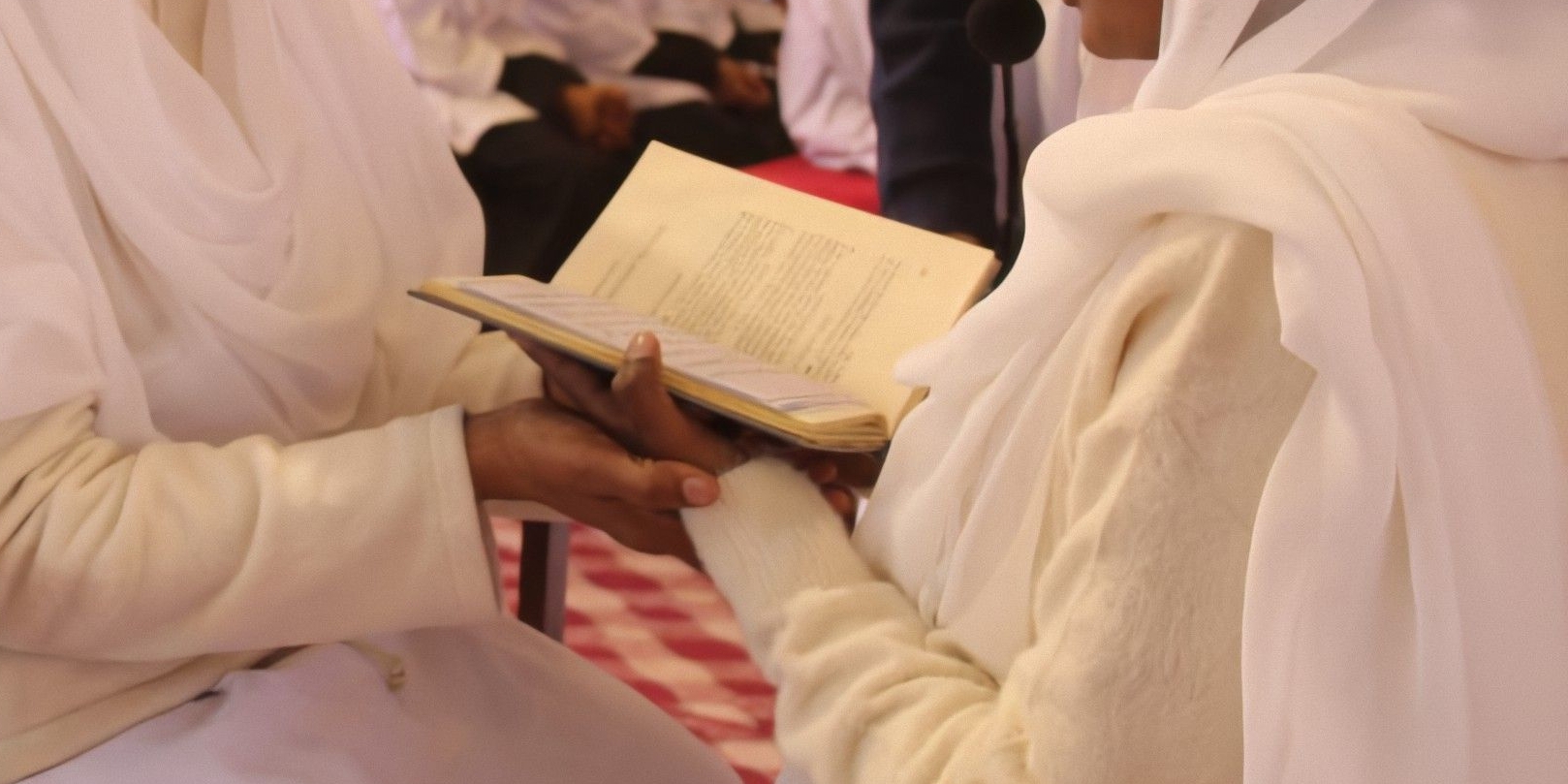
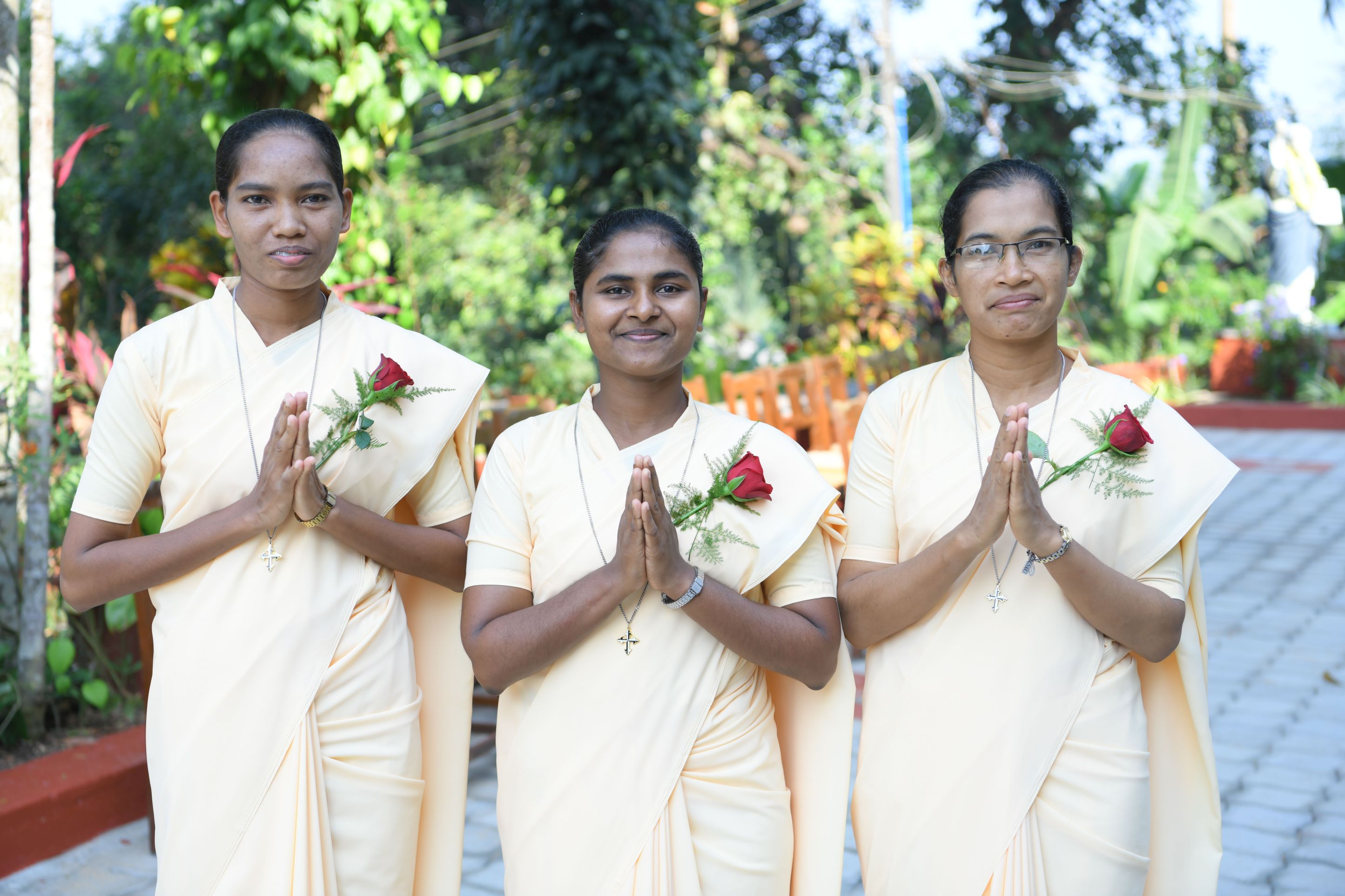
On Saturday, February 11, we accompanied our sisters in Pakistan and India. In Pakistan, three novices made their first vows, and in India, three sisters took their perpetual vows.
There is no fixed vow date in our congregation, so it was a nice coincidence... The Indian and Pakistani women don't know each other and belong to two countries with rather difficult relations, yet they are and will be sisters and surely they prayed for each other.
We received a video of the ceremony from India, so we enjoyed watching it together, enjoying seeing familiar sisters and learning the names of those we don't know yet.
The sisters from Pakistan sent a number of photos which helped us to see the new sisters.
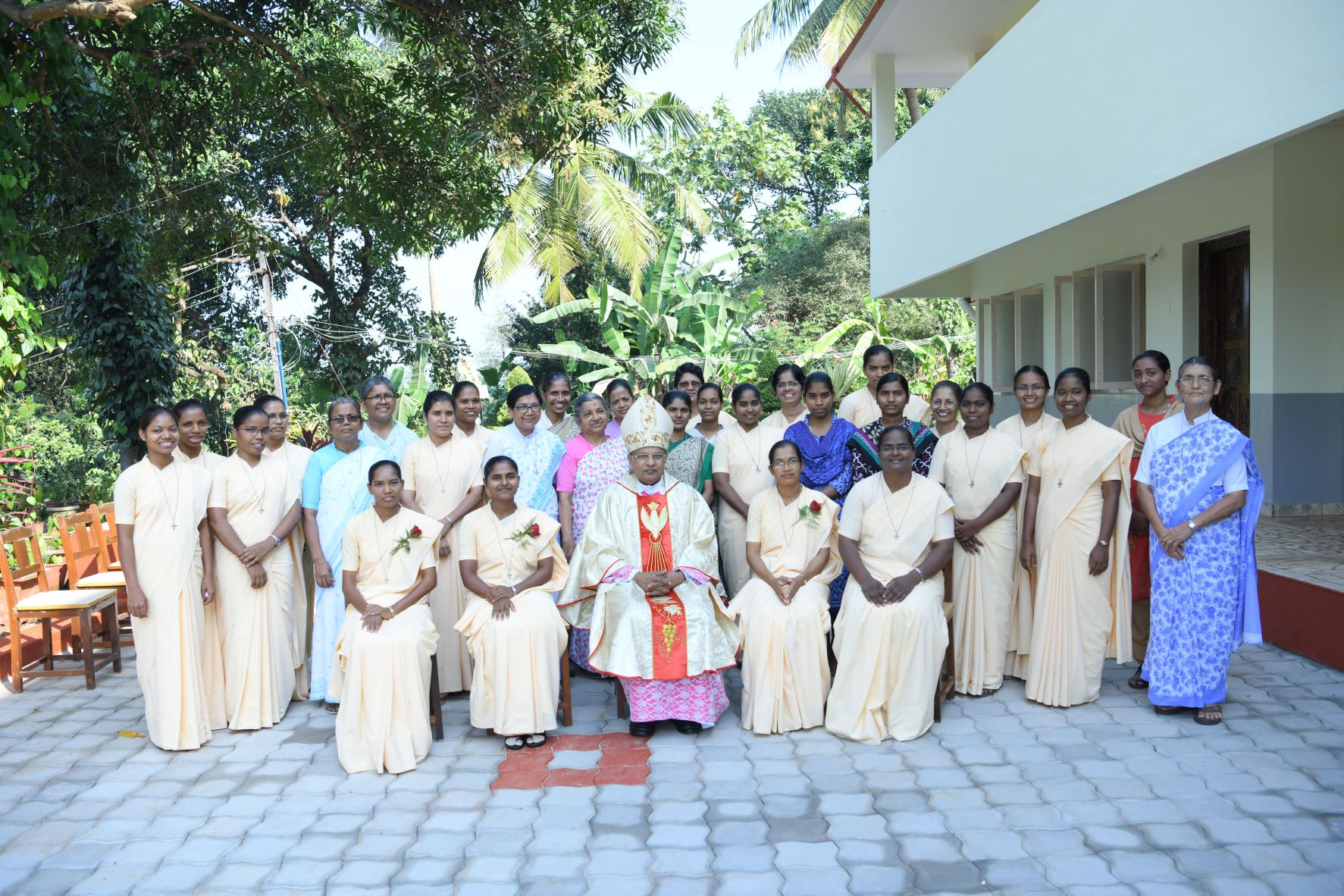
There is no fixed vow date in our congregation, so it was a nice coincidence... The Indian and Pakistani women don't know each other and belong to two countries with rather difficult relations, yet they are and will be sisters and surely they prayed for each other.
We received a video of the ceremony from India, so we enjoyed watching it together, enjoying seeing familiar sisters and learning the names of those we don't know yet.
The sisters from Pakistan sent a number of photos which helped us to see the new sisters.
- Details
- Hits: 1292
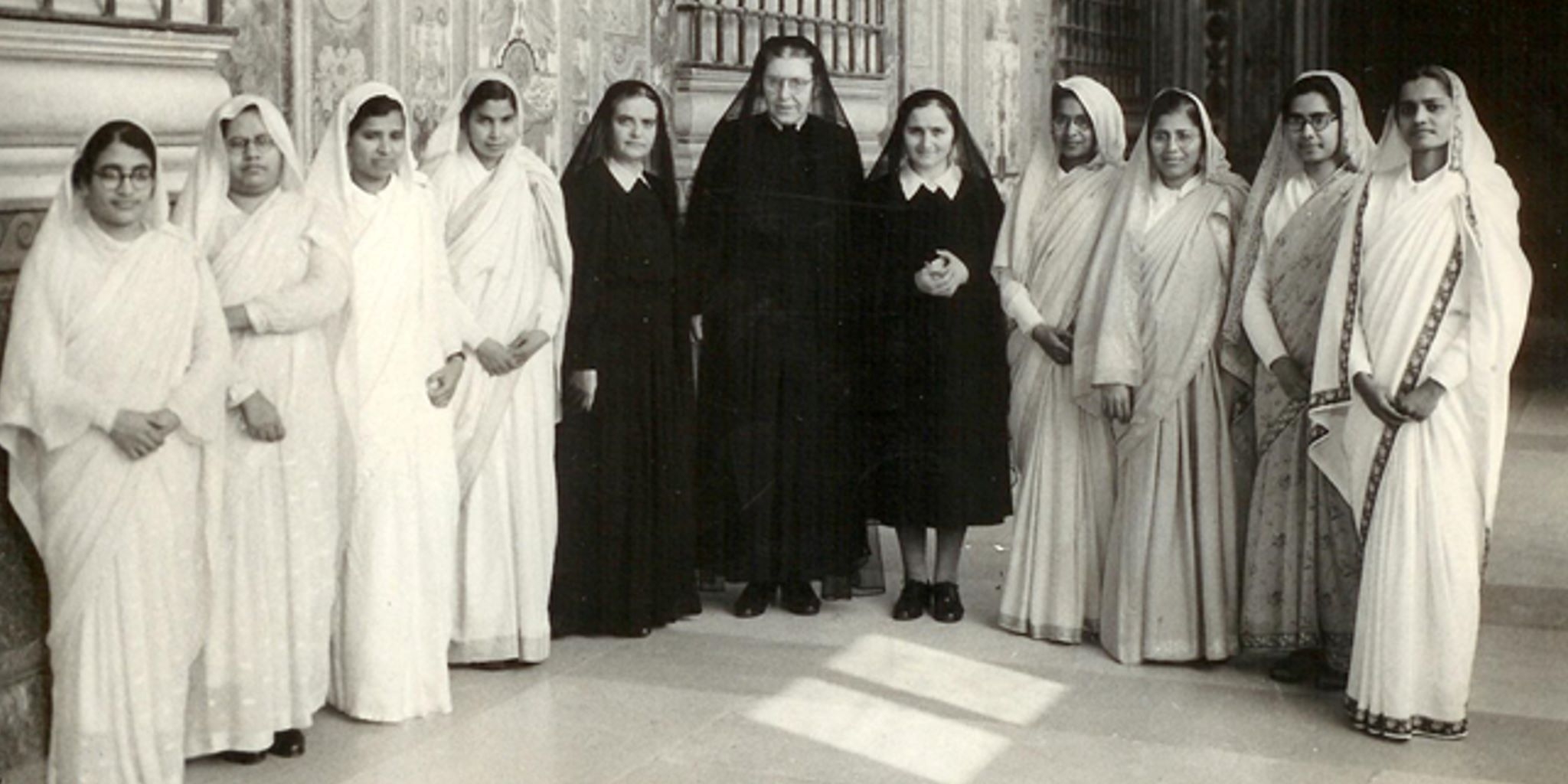
We are proud to remember that 75 years ago Our Mother Luigia Tincani started the Mission in Pakistan.
Today we celebrate 75 years of our Mission and our presence in Pakistan.
On 7th February 1948 five sisters from Italy came to Multan, Pakistan to serve the local Church on the request of His Excellency Bishop Francesco Benedetto Cialeo (Late) who himself was Missionary in pakistan. Dominican school Missionaries started their Mission from Saint Mary’s Convent school, Multan. Congratulations to all our sisters.
Congratulations for the Arrival of our sisters in Pakistan and completing 75 years of our Mission.
We thank the Lord for our Sisters who have gone to the Lord. It is because of them that local vocations have been brought up and barring fruit. May their souls rest in peace Amen.
May the Lord bless our work and make us more zealous, faithful, and enthusiastic through our prayer and common life. Amen.
- Details
- Hits: 1448
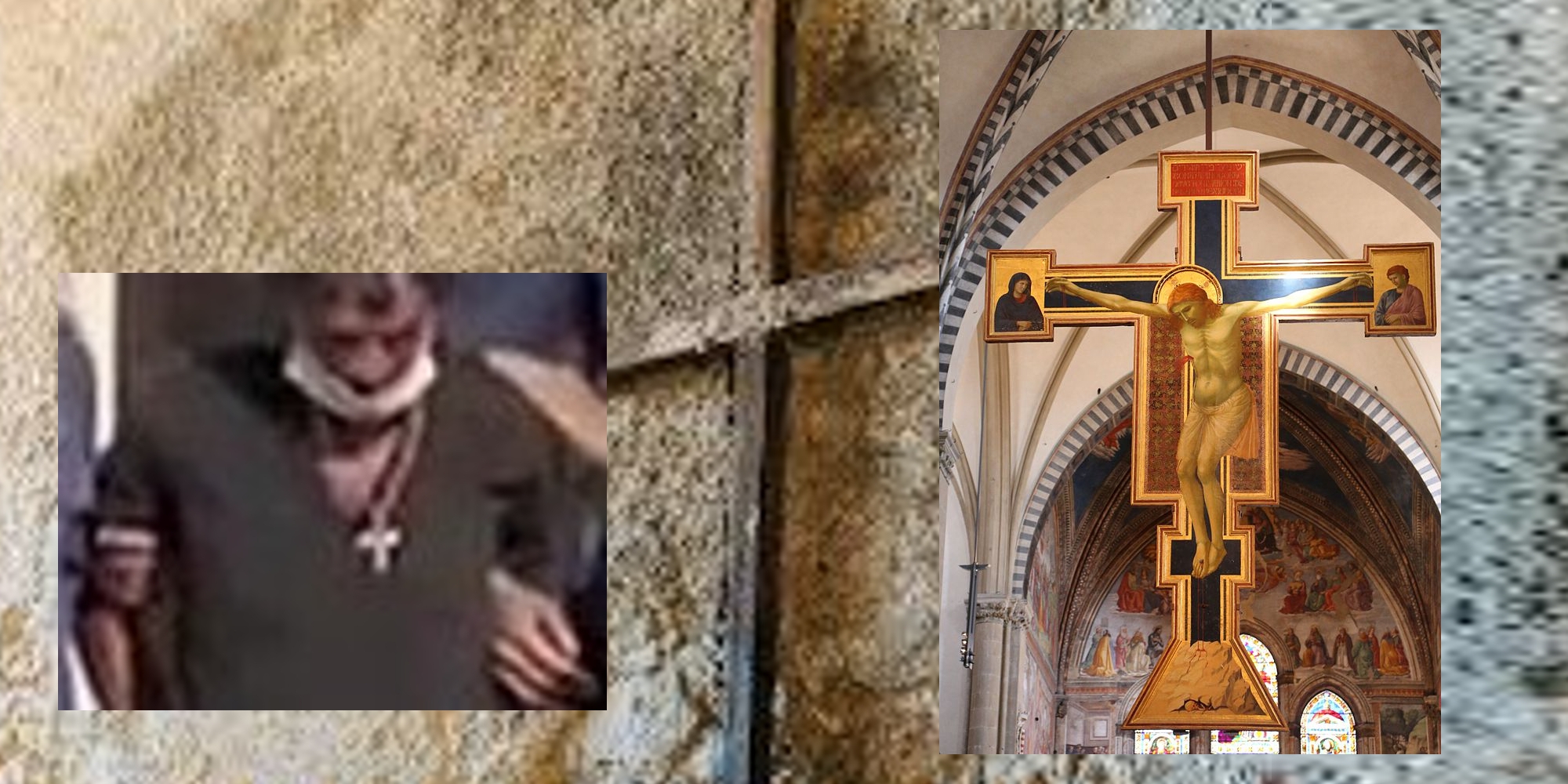
When, two days ago, after the umpteenth feminicide, the cameras lingered for a few moments on the scene of the husband's arrest, we may have felt an instinctive sense of repulsion at seeing the small cross prominently displayed around the neck of the arrested man.
But today the Church celebrates, in East and West, the feast of the Exaltation of the Holy Cross, that is, the redemptive efficacy of God's love, in solidarity with human suffering. Thus, the sign of Cain (Gen 4:15) also reveals itself as a sign of hope offered to every man or woman, creatures redeemed by the blood of Christ and grafted by him into the life of God.
Let no one take that cross (ie, that hope) from our souls, nor from our eyes. Without fear of calling things by their name, we recognize ourselves as brothers only if we learn to look at ourselves as God does.
But today the Church celebrates, in East and West, the feast of the Exaltation of the Holy Cross, that is, the redemptive efficacy of God's love, in solidarity with human suffering. Thus, the sign of Cain (Gen 4:15) also reveals itself as a sign of hope offered to every man or woman, creatures redeemed by the blood of Christ and grafted by him into the life of God.
Let no one take that cross (ie, that hope) from our souls, nor from our eyes. Without fear of calling things by their name, we recognize ourselves as brothers only if we learn to look at ourselves as God does.

- Details
- Hits: 1284
While the marketing strategies deployed for the much-needed restart of consumption are shining everywhere with the wishes for the "seasonal festivities", the Advent Calendar is also on offer with chocolates and other attractions for children and adults with nostalgia for their childhood.
In a world with few certainties, hopes for "recovery and resilience" are entrusted to the expertise of politicians, economists, scientists, and even more to the hard work of those who work or do voluntary work, i.e. the commitment of "families and businesses". But we seem to have to limit ourselves to more or less optimistic forecasts, continually grappling with the variations - health, geopolitical, ecological, financial - that put the budgets of families as well as states to the test.
So also Christian Advent - a liturgical time that retraces God's journey towards man, within history - seems to be emptied of the perception of an arrival ("Behold, he who takes upon himself the sin of the world", Jn 1:29), and also of the perception of an uninterrupted presence in our history ("I am with you always, until the fullness of time", Mt 28:20).
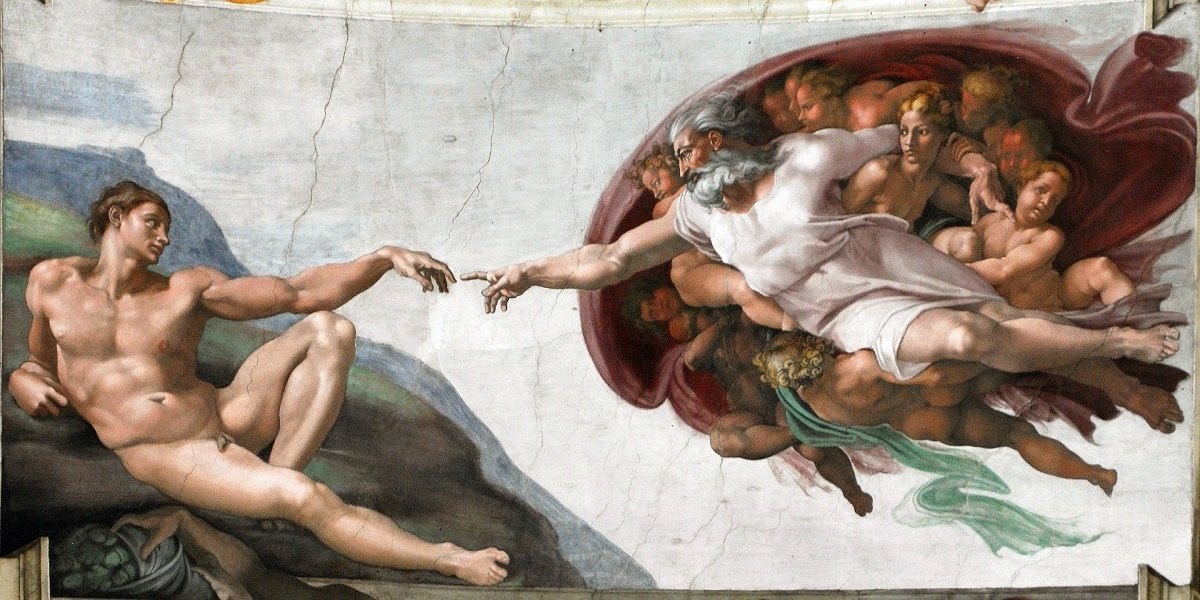
And yet, paradoxically, the improbable camouflages of this Advent, just as they reduce the alacrity of man's journey in search of God, can restore awareness of the initiative of God's journey in search of man, as the Jewish philosopher Abraham Heschel already pointed out.
Our questions, our expectations, our prayers, are nothing more than responses - mostly awkward and inadequate - to the One who comes to seek us out and to share our journey.
And the essential thing is not to find Him, but to let ourselves be found by Him. Catherine of Siena understood the paradox of a God who responds to the Christian's prayer - "Lord, I am not worthy that you should enter in me" - with: "But I am worthy to enter in you!” (Legenda maior, 192).
“There are no easy answers to complex problems," recalled Pope Francis at the refugee reception centre in Mytilene, "instead, we need to accompany processes from within”.
God takes us seriously. And if we realise this, life changes.
In a world with few certainties, hopes for "recovery and resilience" are entrusted to the expertise of politicians, economists, scientists, and even more to the hard work of those who work or do voluntary work, i.e. the commitment of "families and businesses". But we seem to have to limit ourselves to more or less optimistic forecasts, continually grappling with the variations - health, geopolitical, ecological, financial - that put the budgets of families as well as states to the test.
So also Christian Advent - a liturgical time that retraces God's journey towards man, within history - seems to be emptied of the perception of an arrival ("Behold, he who takes upon himself the sin of the world", Jn 1:29), and also of the perception of an uninterrupted presence in our history ("I am with you always, until the fullness of time", Mt 28:20).
And yet, paradoxically, the improbable camouflages of this Advent, just as they reduce the alacrity of man's journey in search of God, can restore awareness of the initiative of God's journey in search of man, as the Jewish philosopher Abraham Heschel already pointed out.
Our questions, our expectations, our prayers, are nothing more than responses - mostly awkward and inadequate - to the One who comes to seek us out and to share our journey.
And the essential thing is not to find Him, but to let ourselves be found by Him. Catherine of Siena understood the paradox of a God who responds to the Christian's prayer - "Lord, I am not worthy that you should enter in me" - with: "But I am worthy to enter in you!” (Legenda maior, 192).
“There are no easy answers to complex problems," recalled Pope Francis at the refugee reception centre in Mytilene, "instead, we need to accompany processes from within”.
God takes us seriously. And if we realise this, life changes.
- Details
- Hits: 1381
In his homily for the feast of the Divine Mercy, Pope Francis reminded that only the awareness of being forgiven and continuously receiving the mercy from God and being the fruit of His mercy makes one capable of seeing themselves and others with the eyes of God, who is the Creator. It gives us peace, however, "it is no outward peace, but peace of heart." It becomes the reason to send them with the mission. "The disciples realized that they had been shown mercy: they realized that God did not condemn or demean them, but instead believed in them. God believes in us even more than we believe in ourselves. "He loves us better than we love ourselves." The Pope quotes cardinal Newman to show how much more God loves us than we love ourselves. Saint Catherine of Siena claimed the same thing. It gave her such a joy that it made her feel "like intoxicated" by the consciousness of the fact that God not only loves but adores His creation as it is, which was thought and contemplated in His infinite love.
Savouring the mystery of the creation of a man, Catherine underlines the Trinitarian aspect of a human being, who was created on the image and likeness of God – the One and Trinity. "Have mercy on your people with the same eternal love that led you to create us in your image and likeness. You said: Let us make humankind in our image and likeness. And this you did, eternal Trinity, willing that we should share all that you are, high eternal Trinity! You eternal Father, gave us memory to hold your gifts and share your power. You gave us understanding so that, seeing your goodness, we might share the wisdom of your only-begotten Son. And you gave us free will to love what our understanding sees and knows of your truth, and so share the mercy of your Holy Spirit. Why did you so dignify us? With unimaginable love, you looked upon our creatures within your very self, and you fell in love with us." (Dialogue 13)
The joy of being loved by God, of being a creature, which everything that has, has received from God, made Catherine the advocate of the Divine Mercy, which gives a man life and accompanies him or her in the path. "By your mercy we were created. And by your mercy we were created anew in your Son's blood. It is your mercy that preserves us. (…) Your mercy is life-giving. It is the light in which both the upright and sinners Discovery your goodness. (…) O, mad lover! It was not enough for you to take on our humanity: You had to die as well! Nor was death enough: You descended to the depths to summon our holy ancestors and fulfil your truth and mercy in them. (…) I see your mercy pressing you to give us even more when you leave yourself with us as food to strengthen our weakness, so that we forgetful fools should be forever reminded of your goodness. Every day you give us this food, showing us yourself in the sacrament of the altar within the mystic body of the Holy Church. And what has done this? Your mercy. O mercy! My heart is engulfed with the thought of you! For wherever I turn my thoughts I find nothing but mercy!" (Dialogue 30)
In this society which is more and more focused on the materialistic part of the reality, which more and more often sees the value of a human being by looking at the success, smugness and appearance, saint Catherine's point of view helps to return to what is in the basis – a man is a creature. It is a perspective of faith. And believing in God becomes also believing in man, every man created on the image of Trinity. This perspective enables us to trespass the boundaries of one's own world to meet with "the other", that we encounter every day in our paths.
Just as Pope Francis has mentioned several times, only if we are aware of being mercyfied, of the need of being continuously mercyfied, we can be merciful to another person, as we will have the look that lifts another person up. It enables us to become a brother and a sister and to stand in front of God, just like Catherine, and intercede for others, not for the sake of one's own salvation or to feel good, but only for the sake of another person. "So I beg you, divine eternal Love, to take your revenge on me, and be merciful to your people. I will not leave your presence till I see that you have been merciful to them. For what would it mean to me to have eternal life if death were the lot of you people, or if my faults especially and those of your other creatures should bring darkness upon your bright, who is light itself?" (Dialogue 13)
Nowadays, during this difficult time in which we can meet both, generosity of goodness and egoistic approaches, the example of Saint Catherine seems to be more than actual. Everyone can become a mercy to another. The only thing to be done is to kneel before so many wounds of the world and become a prayer for those who do not even have the strength to raise their eyes to God. As Pope Francis said: "Everything comes from this, from the grace of receiving mercy. This is the starting point of our Christian journey. But if we trust in our own abilities, in the efficiency of our structures and projects, we will not go far. Only if we accept the love of God, will we be able to offer something new to the world."
Savouring the mystery of the creation of a man, Catherine underlines the Trinitarian aspect of a human being, who was created on the image and likeness of God – the One and Trinity. "Have mercy on your people with the same eternal love that led you to create us in your image and likeness. You said: Let us make humankind in our image and likeness. And this you did, eternal Trinity, willing that we should share all that you are, high eternal Trinity! You eternal Father, gave us memory to hold your gifts and share your power. You gave us understanding so that, seeing your goodness, we might share the wisdom of your only-begotten Son. And you gave us free will to love what our understanding sees and knows of your truth, and so share the mercy of your Holy Spirit. Why did you so dignify us? With unimaginable love, you looked upon our creatures within your very self, and you fell in love with us." (Dialogue 13)
The joy of being loved by God, of being a creature, which everything that has, has received from God, made Catherine the advocate of the Divine Mercy, which gives a man life and accompanies him or her in the path. "By your mercy we were created. And by your mercy we were created anew in your Son's blood. It is your mercy that preserves us. (…) Your mercy is life-giving. It is the light in which both the upright and sinners Discovery your goodness. (…) O, mad lover! It was not enough for you to take on our humanity: You had to die as well! Nor was death enough: You descended to the depths to summon our holy ancestors and fulfil your truth and mercy in them. (…) I see your mercy pressing you to give us even more when you leave yourself with us as food to strengthen our weakness, so that we forgetful fools should be forever reminded of your goodness. Every day you give us this food, showing us yourself in the sacrament of the altar within the mystic body of the Holy Church. And what has done this? Your mercy. O mercy! My heart is engulfed with the thought of you! For wherever I turn my thoughts I find nothing but mercy!" (Dialogue 30)
In this society which is more and more focused on the materialistic part of the reality, which more and more often sees the value of a human being by looking at the success, smugness and appearance, saint Catherine's point of view helps to return to what is in the basis – a man is a creature. It is a perspective of faith. And believing in God becomes also believing in man, every man created on the image of Trinity. This perspective enables us to trespass the boundaries of one's own world to meet with "the other", that we encounter every day in our paths.
Just as Pope Francis has mentioned several times, only if we are aware of being mercyfied, of the need of being continuously mercyfied, we can be merciful to another person, as we will have the look that lifts another person up. It enables us to become a brother and a sister and to stand in front of God, just like Catherine, and intercede for others, not for the sake of one's own salvation or to feel good, but only for the sake of another person. "So I beg you, divine eternal Love, to take your revenge on me, and be merciful to your people. I will not leave your presence till I see that you have been merciful to them. For what would it mean to me to have eternal life if death were the lot of you people, or if my faults especially and those of your other creatures should bring darkness upon your bright, who is light itself?" (Dialogue 13)
Nowadays, during this difficult time in which we can meet both, generosity of goodness and egoistic approaches, the example of Saint Catherine seems to be more than actual. Everyone can become a mercy to another. The only thing to be done is to kneel before so many wounds of the world and become a prayer for those who do not even have the strength to raise their eyes to God. As Pope Francis said: "Everything comes from this, from the grace of receiving mercy. This is the starting point of our Christian journey. But if we trust in our own abilities, in the efficiency of our structures and projects, we will not go far. Only if we accept the love of God, will we be able to offer something new to the world."