- Details
- Hits: 1393
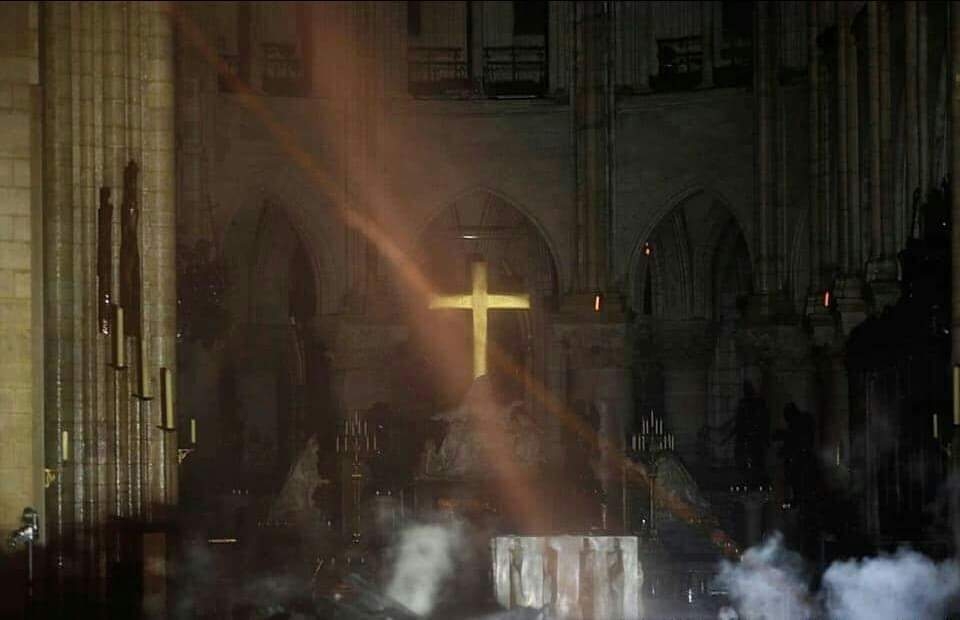
"Hail, o Cross, our only hope
in this time of the passion!”
in this time of the passion!”
(from Liturgy)
- Details
- Hits: 1540
Wishes… Who invented them? Ancient Romans? Egyptians? And why do we give them in particular days like birthdays, different feasts? It could be an interesting topic to discuss, but maybe let us leave it for another time.
Nowadays to send wishes we use postcards. They do not have a lot of space, therefore we do not need to force ourselves intellectually to write a long letter. Two sentences will do the work. In certain moment in time there was this danger that postcards would disappear, because everybody started sending emails. At first it was possible to send only text, but with the development of technology people started sending photos as well. And now we have a big come back of postcards containing more or less beautiful photos and already written text. All you need to do is to sign and then click. It’s done.
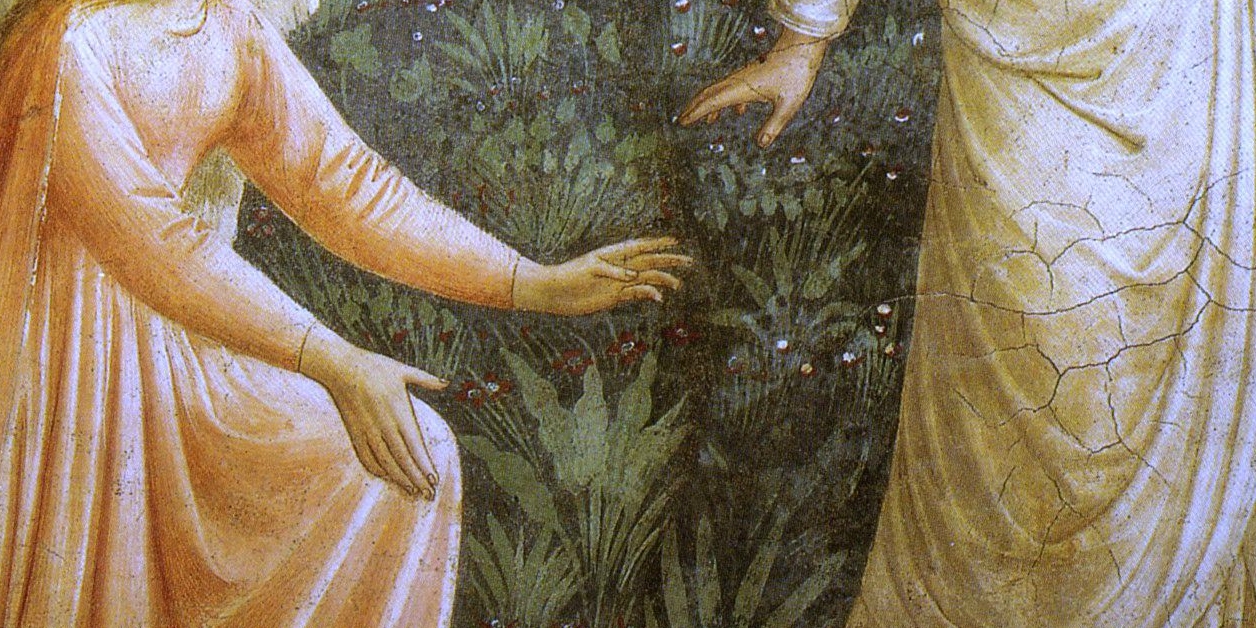
These days we will have a lot of postcards around, giving best wishes for… for what? Easter? Or wishing just Happy Feast? Sometimes maybe even all the best for the beginning of spring? Well, each occasion is good, everyone can celebrate whatever they want, share their joy with family and friends as they like it. Everyone can choose a photo which they like and which suits the best, or maybe the one that comes as the first one in the browser. Somebody will send a postcard with a chick, somebody else will choose the one with Easter eggs or a bunny. Or maybe another one will find the one with a Man in a white cloth, with light coming out of space (a tomb? a hidden place?).
Anybody can send whathever they want, whatever they like or their addressee likes. However, if this Feast is about the Resurrection of Jesus, maybe we could think a little bit more about Him? After all, it is His Feast, not a feast of a bunny or colourful eggs, with all the respect for them.
Nowadays to send wishes we use postcards. They do not have a lot of space, therefore we do not need to force ourselves intellectually to write a long letter. Two sentences will do the work. In certain moment in time there was this danger that postcards would disappear, because everybody started sending emails. At first it was possible to send only text, but with the development of technology people started sending photos as well. And now we have a big come back of postcards containing more or less beautiful photos and already written text. All you need to do is to sign and then click. It’s done.
These days we will have a lot of postcards around, giving best wishes for… for what? Easter? Or wishing just Happy Feast? Sometimes maybe even all the best for the beginning of spring? Well, each occasion is good, everyone can celebrate whatever they want, share their joy with family and friends as they like it. Everyone can choose a photo which they like and which suits the best, or maybe the one that comes as the first one in the browser. Somebody will send a postcard with a chick, somebody else will choose the one with Easter eggs or a bunny. Or maybe another one will find the one with a Man in a white cloth, with light coming out of space (a tomb? a hidden place?).
Anybody can send whathever they want, whatever they like or their addressee likes. However, if this Feast is about the Resurrection of Jesus, maybe we could think a little bit more about Him? After all, it is His Feast, not a feast of a bunny or colourful eggs, with all the respect for them.
- Details
- Hits: 1336
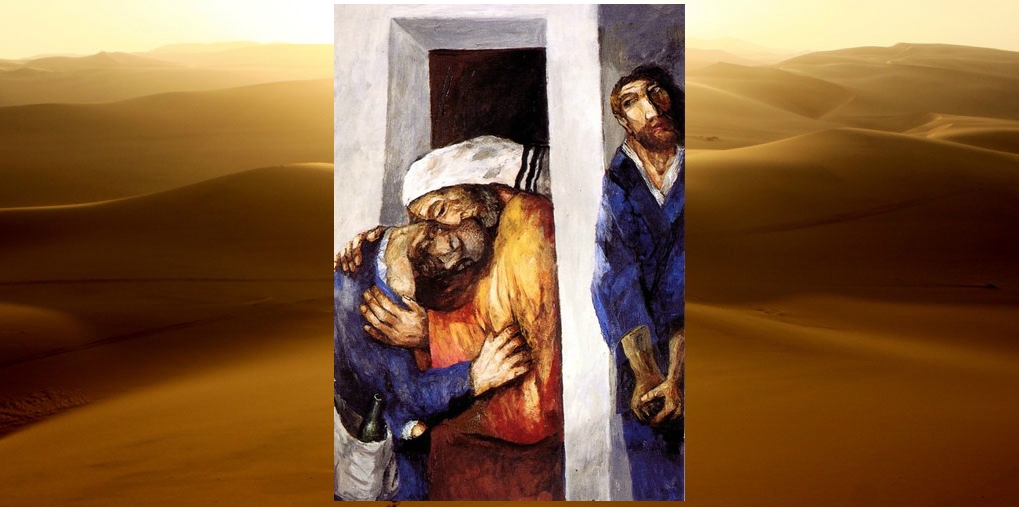
At half of our Lenten road, the liturgy reminds us that in the Easter perspective the partying is part and parcel of our daily living however tiring is a journey: “Exult, exult … all you who were mourning …!” (Is 66:10). But in the Merciful Father’s parable he’s the one who parties, trying his best to involve both sons in the joyful feast, to make them feel at home. Sharing his love he makes them sons and enables them to recognize each other brother.
The younger son, after squandering his inheritance in a distant country (Lk 15:13), feeling in dire need just “came to his senses” (v. 17) and in deciding to go back to his Father he just wanted to be treated as a hired worker: he was unaware of the boundless creativity of that love which surpasses the distance (v. 20). The son’s identity is given back to him in a gratuitous super-abundant way. Putting the ring to his finger (v. 22) the Father entrusts to his hands the entire estate, not only the portion the younger boy wanted to keep all for himself, when he pretended that the Father should divide his estate among his children (v. 12). Nevertheless, it’s the Father who reintegrates the property and establishes the family ties, reminding that everything he has belongs to both sons too (v. 31). From the Book of Genesis we read that creation is entrusted to men and women, but never as today we can feel our co-responsibility in the management of the ecosystem.
While governments are urged by teenage environmentalists and scientists suggest solutions, the Creator’s commitment is encouraging: “Lo, I am about to create new heaven and a new earth. The things of the past shall not be remembered or come to mind. Instead, there shall always be rejoicing and happiness in what I create; For I create Jerusalem to be a joy and its people to be a delight. I will rejoice in Jerusalem and exult in my people” (Is 65:17-19). The linchpin of the feast then is the new creation realized in the Easter Mystery, to which Lent makes us go; the expectation of what God was going to create is in the question of those waiting for the coming of Jesus for his saving Easter: “What do you think? That he will not come to the feast?” (Jn 11:56).
Then the feast is of the Father who shares it with both sons. He doesn’t rejoice without them, but makes them sons through Jesus, the only Son of God: He is the One who involves us in the communion with his Father by teaching us to pray the Our Father.
But in the Luke’s parable not only the younger son should transform himself from servant to son: even the older one never felt himself more than a good servant on credit to his father for he’s a hard working-man : yet the father never gave him even a young goat (let alone the fattened calf!) to feast on with his friends (v. 29)…
What the elder son regretted was that he missed a party: but in his mind that was not the party of the Father (because could be there even unworthy persons), it had to be an exclusive one, just for some hypothetical friends of a workaholic and resentful young man. Indeed he was unable to feel his own the Father’s estate and to work joyfully to increase that joy.
The feast for the son coming back home is a development in the Lukes’ Gospel (ch. 15) of the feast for the lost sheep and for the lost coin and the occasion of the three parables is offered to Jesus by the coming of some publicans and sinners to hear him (v. 1). It’s a kind of converts which makes a doubt, at the end of the evangelical chapter: the one who is out of the feast is the son hard working in the fields of his Father, but the son knew him too little; namely, he didn’t know his Father from the heart.
The younger son, after squandering his inheritance in a distant country (Lk 15:13), feeling in dire need just “came to his senses” (v. 17) and in deciding to go back to his Father he just wanted to be treated as a hired worker: he was unaware of the boundless creativity of that love which surpasses the distance (v. 20). The son’s identity is given back to him in a gratuitous super-abundant way. Putting the ring to his finger (v. 22) the Father entrusts to his hands the entire estate, not only the portion the younger boy wanted to keep all for himself, when he pretended that the Father should divide his estate among his children (v. 12). Nevertheless, it’s the Father who reintegrates the property and establishes the family ties, reminding that everything he has belongs to both sons too (v. 31). From the Book of Genesis we read that creation is entrusted to men and women, but never as today we can feel our co-responsibility in the management of the ecosystem.
While governments are urged by teenage environmentalists and scientists suggest solutions, the Creator’s commitment is encouraging: “Lo, I am about to create new heaven and a new earth. The things of the past shall not be remembered or come to mind. Instead, there shall always be rejoicing and happiness in what I create; For I create Jerusalem to be a joy and its people to be a delight. I will rejoice in Jerusalem and exult in my people” (Is 65:17-19). The linchpin of the feast then is the new creation realized in the Easter Mystery, to which Lent makes us go; the expectation of what God was going to create is in the question of those waiting for the coming of Jesus for his saving Easter: “What do you think? That he will not come to the feast?” (Jn 11:56).
Then the feast is of the Father who shares it with both sons. He doesn’t rejoice without them, but makes them sons through Jesus, the only Son of God: He is the One who involves us in the communion with his Father by teaching us to pray the Our Father.
But in the Luke’s parable not only the younger son should transform himself from servant to son: even the older one never felt himself more than a good servant on credit to his father for he’s a hard working-man : yet the father never gave him even a young goat (let alone the fattened calf!) to feast on with his friends (v. 29)…
What the elder son regretted was that he missed a party: but in his mind that was not the party of the Father (because could be there even unworthy persons), it had to be an exclusive one, just for some hypothetical friends of a workaholic and resentful young man. Indeed he was unable to feel his own the Father’s estate and to work joyfully to increase that joy.
The feast for the son coming back home is a development in the Lukes’ Gospel (ch. 15) of the feast for the lost sheep and for the lost coin and the occasion of the three parables is offered to Jesus by the coming of some publicans and sinners to hear him (v. 1). It’s a kind of converts which makes a doubt, at the end of the evangelical chapter: the one who is out of the feast is the son hard working in the fields of his Father, but the son knew him too little; namely, he didn’t know his Father from the heart.
- Details
- Hits: 1200
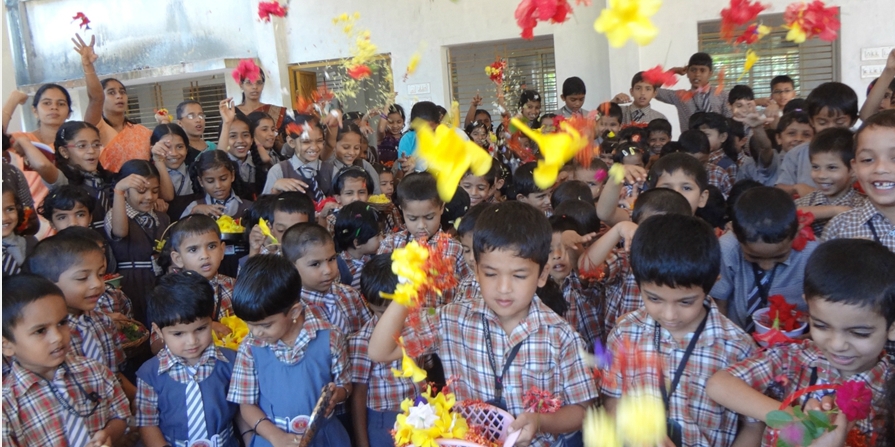
In India every teacher knows the Gandhian definition: « By education, I mean an all-round drawing of the best in child and man in body, mind and spirit ». But in such a multilingual and multiethnic country where technological advancement does not reduce social inequalities, everybody generally thinks of education as literacy and professional training.
In the parish school where I teach I look at the parents (Christians and non-Christians) who accompany their children, they are coming from a modest social condition and aspire to make a qualitative leap through the education of their children. I have seen, for instance, workers with a minimum income but eager for their children to become great, similar to the characters from the television fictions. They have a lot of expectations, but as teachers, we have to aim even higher to train these children . As Gandhi says, to get the best out of the child from the physical, mental and spiritual point of view.
Sensitivity to the common good and respect for the environment are an important aspect of integral education and we start to train this to our young children in the School. In my initial days in this new school I noticed that after the snack break the three monitors had a great job to do which was to collect the trash that the children had thrown on the ground after consuming snacks. The next day I recommended the use of the bins and made the announcement on the speaker. The situation has improved but not much. Then, during teachers meeting, we made plans to encourage children to keep the class and school clean, setting up a score for the best classes.
So now some children, especially those of the third and fourth grade, are very cautious. They look around to see if there is trash and put it in the bin, this is just to win my appreciation and a smile. I feel it is easy to educate children like this as in the future they will grow up to practice a good civic sense keeping in mind the common good. This is currently a big challenge in India, where the waste management and the fight against pollution are a matter of extreme urgency.
Even small lights are important for a more beautiful world.
- Details
- Hits: 1046
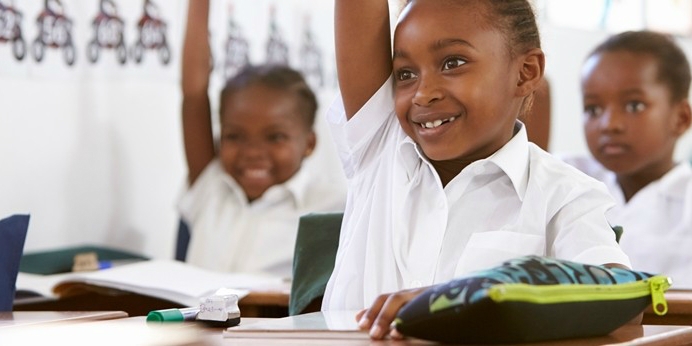
Education is a human right, a public good and a public responsibility.
The United Nations General Assembly proclaimed 24 January as International Day of Education, in celebration of the role of education for peace and development.
Without inclusive and equitable quality education and lifelong opportunities for all, countries will not succeed in achieving gender equality and breaking the cycle of poverty that is leaving millions of children, youth and adults behind.
Today, 262 million children and youth still do not attend school; 617 million children and adolescents cannot read and do basic math; less than 40% of girls in sub-Saharan Africa complete lower secondary school and some four million children and youth refugees are out of school. Their right to education is being violated and it is unacceptable.
As the world marks the very first International Education Day, UNESCO calls on governments and all partners to make universal quality education a leading priority.
- Details
- Hits: 1523
Surrounded by the commercial Christmas attractions let us look at the Baby of Bethlehem, the “image of the invisible God” (Col 1:15), who has come visible over 2000 years ago. Let us also remember that each one of us is created to the image of God, as it is written in the Bible (Gen 1:26), so we could become similar to Him. Only then we can see that dignity and freedom of a man was expressed long time before any philosophical dissertations or international declarations.
To avoid the reduction of God into an idol it was forbidden for a man to make any image of God. Idols could be easily manipulated. But God made Himself to the image of a man, He shared his body and language. Therefore, God remained faithful to His plan in which He projected us “to be conformed to the image of his Son, that he might be the firstborn among many brothers and sisters” (Rm 8:29). This was realized during the Passover, when Jesus called His disciples “friends” (John 15:15) and later, after His Passion and Death, which are human conditions, He called them “brothers” (John 20:17).
The human fraternity, therefore, appears after this birthright. It helps us understand the divine Fatherhood in a new and real way. “See what great love the Father has lavished on us, that we should be called children of God!” (1 John 3:1). The Greek Diogenes was searching a man, a Christian has found a brother. But when he becomes an orphan of God, a modern man at the same time seems to lose the idea of a human brotherhood.
Brotherhood, or fraternity, is still mentioned in the first article of the “Universal Declaration of Human Rights” (1948): “All human beings are born free and equal in dignity and rights. They are endowed with reason and conscience and should act towards one another in a spirit of brotherhood”. Therefore, this solemn Declaration wanted almost to exorcise the catastrophes of the Second World War, which had just finished, to make the first step towards the “common ideals” – liberty, equality and fraternity. It was like believing that “the reason and the conscience” could really induce people to act in the spirit of fraternity one to another.
The 70th Anniversary of the Declaration (10th of December) was remembered as the point of reference which is still indispensable, despite the fact of being constantly violated or even negated. The text of the Declaration has foreseen that the way to reach the ideal will be fraught with contradictions and inconsistencies, therefore it recommended to “strive by teaching and education to promote respect for these rights and freedoms and by progressive measures, national and international, to secure their universal and effective recognition and observance, both among the peoples of Member States themselves and among the peoples of territories under their jurisdiction”.
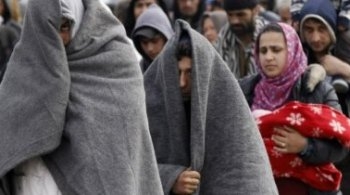
Two days after this solemn Anniversary, 12 December, in Marrakech the Intergovernmental Conference approved the Global Compact for Safe, Orderly and Regular Migration. During the Angelus on 16 December Pope Francis commented on this event and he said he hopes that “ thanks to this instrument, [the international community] will be able to work with responsibility, solidarity and compassion toward those who, for various reasons, have left their own country” without making any distinction between who is an immigrant and who is a refugee. What can emerge from this work with responsibility, solidarity and compassion that the Pope recommends? Once fraternity, this Christian concept of brotherhood that unites each and every human being, is lost, solidarity and compassion are also put into danger. And it can happen not only when sentiments are lead by either individual or collective interests and egoisms, but also when “the other” is not the one that arouses sympathy and tenderness for himself, and therefore, taking responsibility for him becomes a real burden. But Saint Paul recommended “carry each others’ burdens” (Gal 6:2).
As we can see the Christmas message of the Pope this year is concentrated on the topic of fraternity: ”God is a good Father and we are all brothers and sisters. This truth is the basis of the Christian vision of humanity. Without the fraternity that Jesus Christ has bestowed on us, our efforts for a more just world fall short, and even our best plans and projects risk being soulless and empty.”
The human fraternity, therefore, appears after this birthright. It helps us understand the divine Fatherhood in a new and real way. “See what great love the Father has lavished on us, that we should be called children of God!” (1 John 3:1). The Greek Diogenes was searching a man, a Christian has found a brother. But when he becomes an orphan of God, a modern man at the same time seems to lose the idea of a human brotherhood.
Brotherhood, or fraternity, is still mentioned in the first article of the “Universal Declaration of Human Rights” (1948): “All human beings are born free and equal in dignity and rights. They are endowed with reason and conscience and should act towards one another in a spirit of brotherhood”. Therefore, this solemn Declaration wanted almost to exorcise the catastrophes of the Second World War, which had just finished, to make the first step towards the “common ideals” – liberty, equality and fraternity. It was like believing that “the reason and the conscience” could really induce people to act in the spirit of fraternity one to another.
The 70th Anniversary of the Declaration (10th of December) was remembered as the point of reference which is still indispensable, despite the fact of being constantly violated or even negated. The text of the Declaration has foreseen that the way to reach the ideal will be fraught with contradictions and inconsistencies, therefore it recommended to “strive by teaching and education to promote respect for these rights and freedoms and by progressive measures, national and international, to secure their universal and effective recognition and observance, both among the peoples of Member States themselves and among the peoples of territories under their jurisdiction”.
Two days after this solemn Anniversary, 12 December, in Marrakech the Intergovernmental Conference approved the Global Compact for Safe, Orderly and Regular Migration. During the Angelus on 16 December Pope Francis commented on this event and he said he hopes that “ thanks to this instrument, [the international community] will be able to work with responsibility, solidarity and compassion toward those who, for various reasons, have left their own country” without making any distinction between who is an immigrant and who is a refugee. What can emerge from this work with responsibility, solidarity and compassion that the Pope recommends? Once fraternity, this Christian concept of brotherhood that unites each and every human being, is lost, solidarity and compassion are also put into danger. And it can happen not only when sentiments are lead by either individual or collective interests and egoisms, but also when “the other” is not the one that arouses sympathy and tenderness for himself, and therefore, taking responsibility for him becomes a real burden. But Saint Paul recommended “carry each others’ burdens” (Gal 6:2).
As we can see the Christmas message of the Pope this year is concentrated on the topic of fraternity: ”God is a good Father and we are all brothers and sisters. This truth is the basis of the Christian vision of humanity. Without the fraternity that Jesus Christ has bestowed on us, our efforts for a more just world fall short, and even our best plans and projects risk being soulless and empty.”